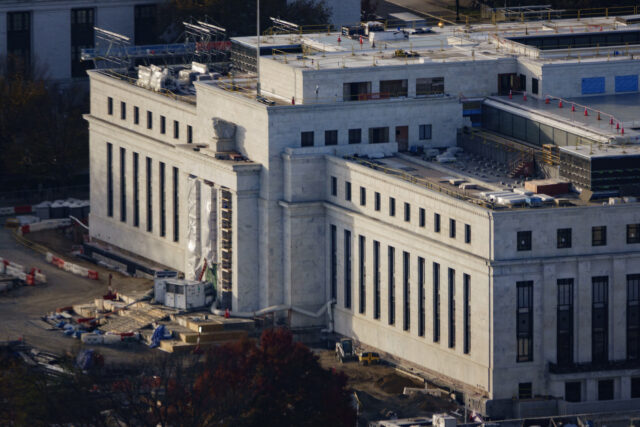

Two Federal Reserve officials said in October that the central bank should consider raising interest rates by more than a quarter percentage point in December if inflation readings were unfavorable, according to minutes released Wednesday.
Nearly every Fed official at the October meeting expected the central bank would probably have to raise rates in the coming months to get inflation back to its 2 percent target. The minutes did not identify the two officials who raised the possibility of a bigger December move.
Fed Governor Christopher Waller said Wednesday that he favored a half-percentage-point increase in December. New York Fed President John Williams said Tuesday that he saw no need to consider a move of that size. The debate followed an October inflation report that showed price increases spreading across goods and services.
The Fed voted 10–2 on October 28 to hold its benchmark interest rate in a range of 3.75 percent to 4 percent, following a quarter-point increase in September. Gov. Lisa Cook and Cleveland Fed President Beth Hammack voted for another quarter-point hike. Waller voted to hold rates steady.
Support for an October hike extended beyond the two dissenters. The discussion included regional Fed presidents who did not have a vote, and some officials who backed the hold said it was a close decision. Officials who wanted to wait cited the need to see how the September increase was affecting borrowing and spending and whether the surge in investment in artificial intelligence would continue.
Investors already expected rate increases in December and in 2027. For several officials, that made waiting in October less risky. Some who preferred to raise rates right away said they could have accepted a hold if investors understood that higher rates were likely.
Officials saw price pressures across the economy even as some said the effects of earlier tariffs were fading. High energy prices continued to lift inflation. Demand for equipment and components used in data centers was also straining supplies and pushing up prices for some consumer electronics. Several officials said those pressures were reaching industries with no direct ties to data center construction.
Fed officials described the job market as stable, with enough hiring to keep pace with growth in the workforce. Consumer spending and business investment continued to support strong economic growth, though higher borrowing costs were weighing on housing, commercial real estate and small businesses.
The Fed next meets December 8–9.
COMMENTS
Please let us know if you're having issues with commenting.