The European Union (EU) has belatedly joined the rush for rare earth minerals in Latin America, months after the United States began working on a deal with Brazil.
EU officials fumbled for diplomatic language to express their desire to become less dependent on China, which controls about 60 percent of the supply and 90 percent of the refining capacity for the valuable minerals. China aggressively uses its dominant position in the market for political leverage, threatening to choke off supplies to countries that displease Beijing, and it manipulates prices to prevent free-market competitors from breaking its grip on the rare earth supply chain.
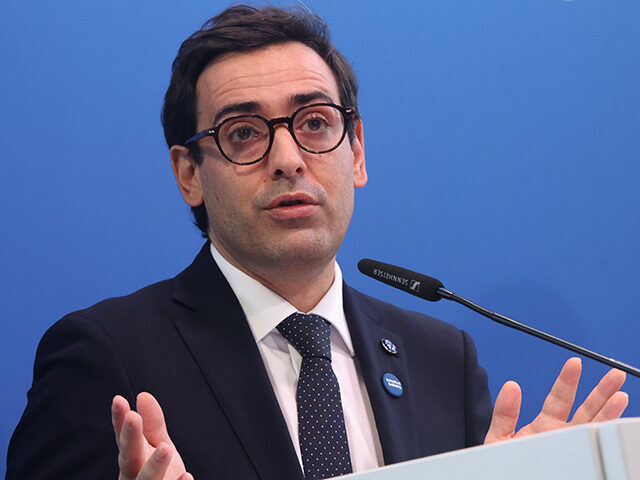
“We want to limit our risks if it comes to a major conflict between China and the U.S.,” explained Stephane Sejourne, European Commissioner for Industry, during an interview last week about the EU’s scramble to build magnet factories and other rare earth production sites.
Sejourne said Europe wants to “become more self-sufficient,” especially after watching China use export controls to cripple the worldwide rare earth supply chain twice in the past year. Like most European officials, he preferred to speak of “de-risking” by developing alternative sources for processed minerals, instead of “de-coupling” from China, a phrase that angers Beijing.
“The U.S. wants to become 100% independent. We don’t,” Sejourne said. “We need Chinese investments, and it is not necessarily a problem if technology comes from China. What matters is that we no longer want to be susceptible to geopolitical blackmail when tensions rise.”
The EU’s current goal is for ten percent of critical raw materials to come from European mines, and 40 percent of the necessary processing to occur in Europe, within five years.
Sejourne’s quest for alternative supplies of rare earth minerals took him to Brazil – where he found the Americans had already beaten him to the punch.
“Last month, I was supposed to go to Brazil to have talks about a mine where rare earth metals are extracted. Three days in advance, we were told that the Americans had come by, put money on the table, and bought up all production until 2030,” he lamented.
“We assumed there was no money available because of the shutdown,” he said, referring to the Democrat Party’s shutdown of the U.S. government, which was in effect at the time. “They had already taken that into account. The money had already been reserved.”
Sejourne mentioned another area where the Trump administration had moved quickly and set an example for Europe to follow — setting price floors for critical minerals — which prevents China from flooding the market and crashing prices whenever foreign competitors seek investments for their own mines and refineries. According to Sejourne, European companies are demanding similar protection before they make the big investments in mining and refineries demanded by the EU development plan.
When his interviewer noted that his “vision is sometimes reminiscent of Trump’s,” Sejourne replied: “I do not share his methods, but I do share his agenda, in the sense that I believe we should reindustrialize Europe.”
In early December, the European Commission announced it would invest about $3.5 billion in extracting, refining, and recycling critical minerals, and establish a “European Center for Critical Raw Materials” next year.
Recycling rare earths and critical minerals from magnets reaching the end of their service lives, and electronic waste, is a hot topic in the industry today. The Trump administration in November announced a $1.4 billion partnership with two companies named Vulcan Elements and ReElement Technologies to develop a domestic supply chain for magnets. ReElement Technologies is focused on recycling and reclaiming minerals.
The Europeans are finding at every turn that the Trump administration is “negotiating bilateral agreements everywhere to secure its own supplies,” as Agence France-Presse (AFP) put it. Sejourne’s experience in Brazil was one example of the Europeans getting to the bargaining table a few days or weeks too late.
Brazil on Monday took an important legislative step toward establishing a national policy to organize critical mineral production, including guidelines for supplying lithium, nickel, graphite, and rare earths at scale. Brazilian legislators cited keen U.S. interest in purchasing the minerals as a reason for expediting the legislation.
COMMENTS
Please let us know if you're having issues with commenting.