Analysis: Mass Immigration Pushes U.S. Housing Market to ‘Breaking Point’
Mass immigration has put a significant strain on the housing market, a study from the Federation for American Immigration Reform (FAIR) details.

Mass immigration has put a significant strain on the housing market, a study from the Federation for American Immigration Reform (FAIR) details.

We should remove the tax burden that is keeping older Americans locked into their homes and younger Americans locked out.

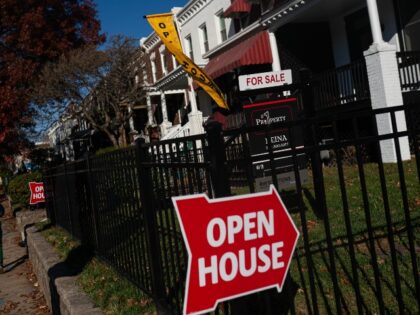
The Washington, DC, area housing market has seen an increase in homes being listed for sale as more government employees have either been laid off or have accepted buyouts.

Home prices, and therefore the American Dream, are the most “unaffordable … in history,” according to the latest data.

The Bank of England has admitted that mass migration is a chief factor in the increasing cost of rent in the country.

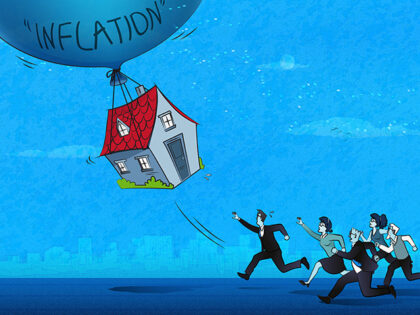
If you can slow down the housing market, you can probably slow down the economy and reduce inflation.

Prices for luxury homes in the United States have reached a record high, rising nearly nine percent in the first quarter of 2024, twice as much as the prices of non-luxury homes.

Many renters in the United States worry that they will never be able to buy a home, citing a lack of affordability, according to a recent survey.

Could the housing market finally be cracking under the pressure of higher interest rates?

Breitbart economics and finance editor and author John Carney said Wednesday on Fox Business Network’s “Kudlow” that the U.S. housing market had “gone berserk,” creating the “least affordable housing market we ever had.”

During an interview with ABC News on Friday, Rep. Haley Stevens (D-MI) stated that striking auto workers are concerned about whether they can afford to buy homes because “Housing prices are high right now. Interest rates are at a uniquely

On Friday’s broadcast of “CNN This Morning,” co-host Phil Mattingly and CNN International host Julia Chatterley discussed the surge in mortgage rates and said that the skyrocketing mortgage rates have contributed to “the worst affordability crisis in housing that we’ve

It’s not exactly a self-evident truth, but it is a data-evident truth: the U.S. housing market is recovering.

San Francisco families are trying to survive in RVs and trailers after the housing market forced them into the situation.

The economy is not losing steam at the rate many economists expected. To the contrary, we appear to be accelerating.

The housing recession is over—for now.

Homebuyers in Democrat-run states are overwhelmingly searching to move to cities in red states, according to the Redfin report.

The today’s economic data is hard to square with the idea that the economy is on the brink of a recession.

This is not the sort of jobs report you would expect if the economy was teetering on the edge of a recession.

There were more green shoots of a recovery in the housing market to be seen on Tuesday.

We’re still awash in data showing January was a month of unexpectedly strong growth and resurgent inflation.

A considerable majority of Canadians believe the country is “broken” as housing and food costs soar and concerns over the healthcare system.

The American housing market is suffering its second-largest price correction since the end of World War II, and one expert attributes it partly to people’s concerns about economic issues.

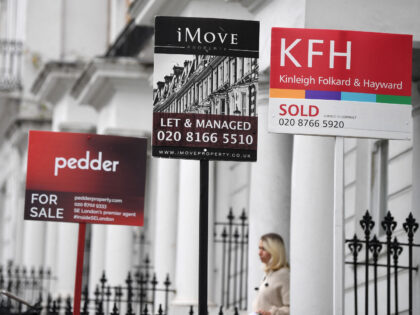
The weekly price for London residential rentals climbed to a record high in large part as a result of the elitist mass migration agenda.

On Monday’s broadcast of CNN’s “Early Start,” Moody’s Analytics Chief Economist Mark Zandi said that we have “a long way to go to get back to anything anyone would feel comfortable with” on inflation, stated that even if the economy

An already ailing housing market could be in for more trouble as high mortgage rates have not been fully felt yet, according to Goldman Sachs analysts via Business Insider.

The U.S. economy has decoupled from itself. The bad news is that the Federal Reserve wants to put it back together.

The housing market in the U.S. will likely continue to see lower sales, less building, and prices decline from recent highs.

On Tuesday’s broadcast of Bloomberg’s “Balance of Power,” White House National Economic Council Director Brian Deese stated that the declining housing market is “the intended result of the Fed’s tightening efforts.” Host David Westin asked, [relevant exchange begins around 17:05]

A Fannie Mae economist predicts the most constricted housing market in the United States since 2006 and will continue to worsen.

Supply chain disruptions, high costs of materials, and rising interest rates are weighing down home builder confidence.