Indonesian Censorship Board Binge-Watched Netflix, Now Wants to Ban It
The Indonesia Film Censorship Board (LSF) has held an emergency meeting regarding Netflix’s recent global expansion and may ban the service from the country entirely.

The Indonesia Film Censorship Board (LSF) has held an emergency meeting regarding Netflix’s recent global expansion and may ban the service from the country entirely.
TEL AVIV – According to an article in Forbes, Israel is set to become a powerhouse for innovation in the Internet of Things (IoT) industry. The author, Eyal Bino, a co-founder of the first NYC-based accelerator for early-stage Israeli tech
In a segment from this Sunday’s 60 Minutes interview broadcast on Friday’s edition of CBS This Morning, Apple CEO Tim Cook reiterated his stance in favor of unbreakable encrypted communication for consumers, dismissing concerns that terrorists and criminals can use such systems to evade law enforcement.
If you are a moron, you could interpret Donald Trump’s statements in the GOP debate tonight to mean he wants to start shutting down specific websites or services on the internet. He clarified later that he was talking about geography: limiting access to, say, Syria or wherever Islamic State is operating from.

Republican presidential candidate Donald Trump stated that he’s “not talking about closing the Internet,” but “you could close it” in “parts of Syria” and “parts of Iraq” during Tuesday’s CNN primetime debate. Trump said, “as far as the Internet is

The European Commission is attempting to rush through new regulations limiting access to the internet for under 16 year olds. Children would be prevented from setting up social media accounts without parental consent, and would face restrictions on their use

Police officers in France have called for a variety of authoritarian powers regarding digital restriction to be added to a new proposed law after the Paris terrorist attacks last month.

The FCC is bringing net neutrality to court today in another attempt to secure regulation on why and how internet service providers can manipulate the access they provide.
Google has censored hundreds of thousands of links to comply with European “right to be forgotten” regulations. A new transparency report reveals that the search giant has complied with 348,508 of the 1,235,473 URLs that users have requested be removed from search results.
The long-running debate over privacy vs. government surveillance – which is the high-tech iteration of the ancient struggle between liberty and security – gained new urgency after the Paris terror attack. Intelligence officials across the Western world are worried that terrorists have found new means of coordinating their efforts that cannot be monitored.
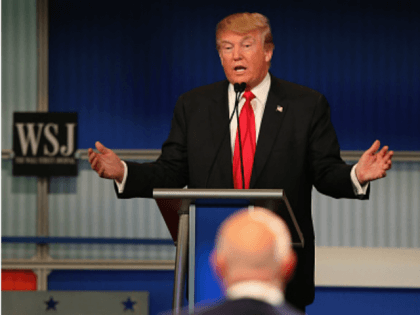
GOP Presidential front runner Donald Trump says that ISIS currently plays the Internet “far better than we do.” In order to beat ISIS, “we have to be a force on the Internet.”
“The White House and POTUS Facebook pages are official White House channels and utilize tools offered by Facebook to promote constructive conversation, including filters for profanity and relevancy of comments,” an administration official said in response to a question from Breitbart News.
The growth of the Internet has been one of the most astounding developments in human history, and it shows no sign of slowing down. In fact, a new report from Business Insider predicts the number of devices connected to the Internet will more than double over the next five years – from 10 billion in 2015, to 34 billion in 2020. That works out to a 28 percent compound annual growth rate.
The staff at Saudi Arabian newspaper Makkah has accused the government’s Committee for Protection of Virtue and Prevention of Vice (CPVPVR), also known as the Religious Police, of using pornographic material to lure suspects online.

China and North Korea were judged weak on defense against hacker attacks in a recent Australian assessment of Asian-Pacific electronic security.

The latest brainstorm from the Chinese Communist Party is a system for monitoring the Internet activity and financial transactions of its citizens, computing a “social credit” score on the acceptability of each person’s behavior, similar to the credit ratings compiled by financial institutions.

The Russian government is operating close to undersea cables, setting off alarms of American officials who believe the Kremlin could cut the lines if tensions continue to escalate.

In the interview with The Blaze, Cruz also denounced President Obama’s plan to hand Internet domain registration over to foreign bodies as “reminiscent of Jimmy Carter’s idea to give away the Panama Canal,” warning it would imperil American interests and “undermine free speech.” Cruz is correct on all counts, and it’s a pity the rest of the Republican field hesitates to address these issues with such verve.

Likely in response to the attack in a Charleston church where nine were murdered earlier this year, the Obama administration has announced a new office at the Department of Justice aimed at tracking and coordinating investigations into domestic terrorism. They are also teaming up with the controversial Southern Poverty Law Center in the process.
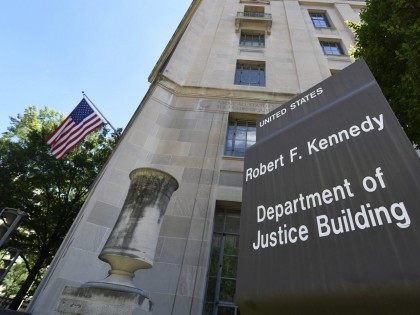
It feels as if the Information Age is trembling on the verge of some catastrophe that will make us rethink the way everything has been restructured to incorporate high-speed Internet access. Perhaps that process has already begun, with the high-profile hacking incidents which have dominated headlines over the past few years.

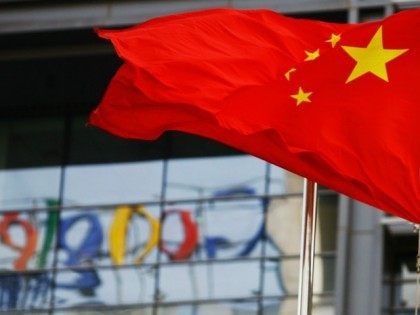
On Friday, a Chinese official declared to the United Nations General Assembly that it was “highly necessary and pressing for the international community to jointly bring about an international code of conduct on cyberspace at an early date.”
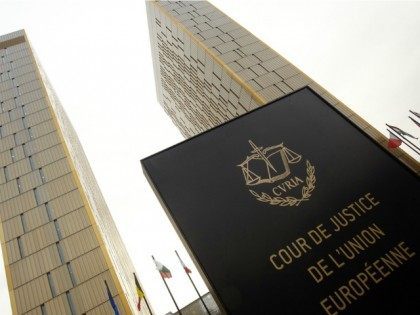
(Ferenstein Wire)—The technology industry is scrambling to understand how it will continue business in Europe, after the continent’s high court struck down a privacy agreement that protected U.S.-based companies operating abroad, known as Safe Harbor.
One of the worst of Barack Obama’s many bad ideas is surrendering control of Internet domains to a shadowy multi-national organization, a move undertaken largely out of embarrassment over Edward Snowden’s exposure of NSA surveillance techniques. Under Article IV, Section 3 of the Constitution, only Congress has the authority to transfer control of such government property, so Obama’s attempt to give it away to foreign bodies without congressional consent would be unconstitutional.
The Wall Street Journal reports on a study from cybersecurity group ThreatConnect and the security consultants at Defense Group, Inc., indicating that China’s military is heavily involved in hacking and cyber crime.
As the effects of Net Neutrality have begun to appear in the tech industry, California’s Employment Development Department reports that the government created more jobs than the private sector did in the Bay Area in August.
China’s state-run news service, Xinhua, lays it on pretty thick in an editorial titled “Xi’s Epic Bid for Better U.S. Ties Bolsters Asian Peace, Prosperity.”

You might call it old-school hacking—the kind of hacking you do with an axe. California police are dealing with a rash of attacks on Internet fiber optic cables. An incident Monday night brought the total number of attacks to 15 since last summer.

What was initially thought to be a weather balloon was actually a giant Google balloon that crash-landed in southern California’s Chino Hills neighborhood Saturday morning. No neighborhood residents were injured when the Google Loon project balloon landed in a palm

Abram Belles, a 91-year-old WWII veteran from Wilkes Barre, Pennsylvania, was all set to be ushered out of the home he’s lived in for almost 70 years because of an overdue tax bill. But nearly 200 people on the Internet unexpectedly rallied to his side to raise the money he needed to stay in his home.

On the whole, the candidates’ websites seemed surprisingly timid, even backward, as if the designers were primarily afraid of (a) soaking up too much bandwidth from visitors, and (b) leaving some important scrap of text off the main screen, for fear that visitors would explore no further. These are both very last-generation concerns. Seriously, folks, it’s 2015. A dash of animation, such as Fiorina and Chris Christie offer, will not cause anyone’s computer to chug.

A deep dive into the subscriber data by Annalee Newitz of Gizmodo suggests there were even fewer female subscribers than previously believed – in fact, she could only find evidence that about 12,000 out of 37 million total profiles belonged to “real women who were active users of Ashley Madison.”

China’s government announced earlier this week that it had arrested 15,000 people for an assortment of cybercrimes, the result of a project announced in July titled “Cleaning the Internet.”
(Reuters) Police in China said on Tuesday they had arrested about 15,000 people for crimes that “jeopardized Internet security”, as the government moves to tighten controls on the Internet.
For years, security-minded politicians have been saying that U.S. spy agencies and the private sector need to have a better working relationship to stop terrorism. But if the arm-in-arm relationship between communications giant AT&T and the National Security Agency is any indication, that relationship is already in full bloom. Worse, the government has been paying AT&T millions to supply the info.

The Internet Corporation for Assigned Names and Numbers (ICANN) posted a 40-day public comment period late August 3 aimed at transferring the oversight of the Internet to a not-for-profit entity.
On Thursday, Facebook Inc., unsatisfied with its global access, announced it has built a full-scale drone to fly between 60,000 feet above ground at night and 90,000 feet during the day to allow the entire world to use Facebook.

As James T. Areddy at the Wall Street Journal tells it, the Chinese military was deeply troubled by the role a supposedly U.S.-dominated Internet played in destabilizing other despotic governments and warned Beijing could be next. The warning described the Internet as “a new form of global control” and the United States as a “shadow” hovering behind various uprisings.
This may be a case of “trolling” gone wild, an increasingly common and troubling phenomenon. It’s easy and cost-free for social media users to whip up campaigns of harassment, unleashing destructive passions that can spill over into far worse activities.
Big people don’t need a pervasive nanny state with vast power, money, and manpower to micro-regulate their business transactions and personal life choices. A larger public sector inescapably means a smaller private one. This is especially true as power shifts from elected officials to the permanent big government bureaucracy, which voters have very little influence upon.

One of the problems faced by Republican campaigns is that Silicon Valley tends to lean left, giving Democrats substantial support in a variety of forms from the big tech companies. There are plenty of great tech people out there ready to work for Republican campaigns, though. Recruiting them early and folding them into a well-organized campaign is essential. Gov. Scott Walker seems to have done just that.