Iran Deal: Obama Speech Preview
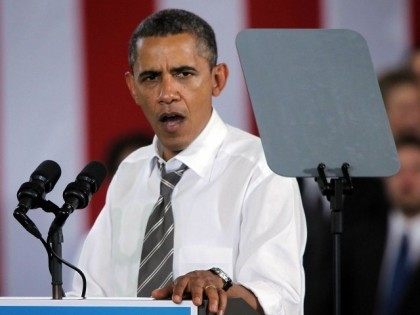
President Barack Obama will deliver a speech on the Iran deal at American University on Wednesday in an attempt to cement support in Congress.

President Barack Obama will deliver a speech on the Iran deal at American University on Wednesday in an attempt to cement support in Congress.
While Israelis, left and right, are overwhelmingly opposed to the deal, American Jews are torn between their general support for President Barack Obama–only black voters have been more loyal–and the reality of what the deal will do to strengthen Iran and threaten both American and Israeli security.

The Iranian regime has filed a complaint with the International Atomic Energy Agency, alleging that the United States has already broken the nuclear deal.
On Monday, Rep. Adam Schiff (D-CA) announced his support for the Iran deal. In a statement, Schiff, the ranking member of the House intelligence committee admitted the deal’s flaws, but said he was supporting it because he believed there was no alternative. He also said that Congress should work with the administration to make the Iran deal stronger.

A new Quinnipiac poll released Wednesday shows that American voters oppose the nuclear deal with Iran by a two-to-one margin. That two-thirds majority corresponds to the vote margins needed in the U.S. House and Senate to override the president’s veto and cancel the deal.

If you want to be on the right side of history, you cannot repeat that mistake. “Never again” means voting no.
Critics of the Iran deal have pointed out that President Barack Obama has imposed a false choice on Congress: accept a bad deal, or go to war—as if those are the only two alternatives. In fact, Obama has imposed a second false choice: either cooperate with the international community, or go it alone.
If Obama and his supporters are so concerned about comments that portray the president as an antisemite, he should stop trying to act like one. At the very least, it shows he knows he cannot defend the Iran deal on its merits.

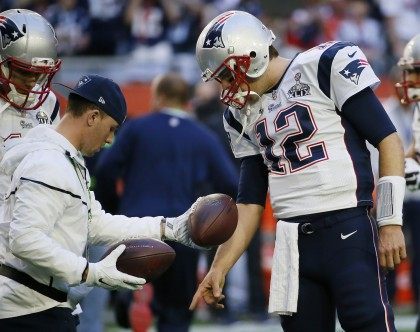
If you understand the “Deflategate” football scandal, you understand what is wrong with the Iran nuclear deal.
A plurality of American Jews now say they oppose the Iran nuclear deal, 45% to 40%–and a majority oppose the deal after they learn more about what is in it, according to a new poll.

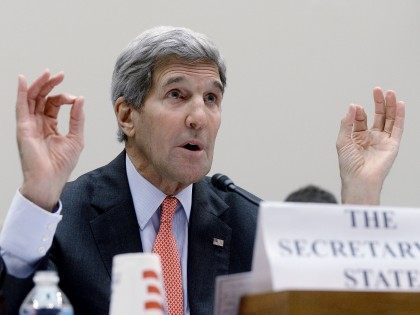
During his testimony on Tuesday before the House Foreign Affairs Committee, Secretary of State John Kerry admitted that states may retain their own sanctions against Iran. However, Kerry said, the Obama administration “will take steps” to urge the states “not to interfere.”
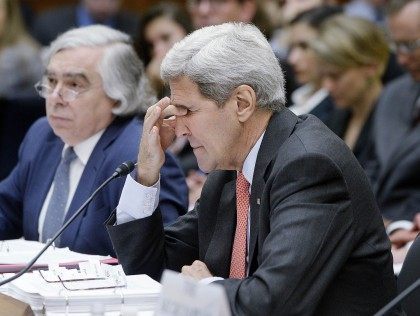
Secretary of State John Kerry misled the House Foreign Affairs Committee in his attempt to defend the Iran nuclear deal on Tuesday, claiming in his opening statement that Iran had complied with the interim agreement “completely and totally,” and that Iran was “required” by the deal to ratify a key agreement that would prevent it from developing dangerous nuclear technologies in the future. In fact, Iran violated parts of the interim agreement, and there is no guarantee that it will ratify the Additional Protocol to the Non-Proliferation Treaty.
A new CNN/ORC poll released Tuesday suggests that the majority of Americans want Congress to reject the Iran deal negotiated by President Barack Obama. Of the 1,017 adults surveyed by telephone July 22-25, 52% want the Iran deal rejected, and 44% want it approved.

The States of New York and California have no intention of complying with the Iran deal’s requirement that state and local governments lift their own sanctions against the Iranian regime.

On Monday’s edition of CNN’s Situation Room, Wolf Blitzer opened the show by telling viewers that former Arkansas Gov. Mike Huckabee had “essentially, essentially likened Barack Obama to Adolf Hitler.” However, that is a mischaracterization of Huckabee’s remarks.

Sen. Charles Schumer (D-NY) promised in 2013 “that together, Democrats and Republicans are gonna work to see that we don’t let up on these sanctions, as this agreement did, until Iran gives up not only all nuclear weapons, but all nuclear weapon capability, all enriched uranium, all the centrifuges, and all the heavy water reactors at Arak.”

The Iran deal, by Schumer’s own standards, is a failure. In May, at a dinner for Agudath Israel, an Orthodox Jewish group that lobbies for religious concerns, Schumer laid out “five things we have to be very, very careful about” in the emerging deal. The Iran deal fails four of five.

The Iran deal will provide Iran with a cash windfall as sanctions are eased and assets are unfrozen. The total amount is estimated to be as high as $150 billion. If so, the Iran deal would give more cash to Iran than

Hundreds of San Diegans gathered at Balboa Park on Sunday to protest against a nuclear deal with Iran and urge Congress to vote against it.

On July 22, Breitbart News was the first to point out that the states have the power to block significant portions of the Iran deal, whether or not it passes Congress. That is because most states have enacted legislation divesting from Iran, and some, like New York, have even harsher legislation that prevents the state from doing business with the regime or with companies that do so. In an op-ed in Monday’s Wall Street Journal, constitutional lawyers David B. Rivkin and Lee A. Casey agree: the states are “free to impose their own Iran-related sanctions.”

A crowd of well over 1,000 gathered outside the Federal Building in West Los Angeles to demand that Congress vote “no” on the nuclear deal with Iran–and to override President Barack Obama’s anticipated veto. The majority of participants were from the local Jewish community, but there was also a significant Christian presence, as well as participation from Muslims opposed to the Iranian regime.

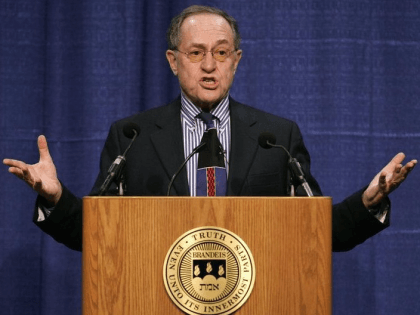
Alan Dershowitz, Harvard Law professor emeritus and noted defender of Israel, has reacted to former Arkansas Gov. Mike Huckabee’s comments on Breitbart News Saturday. “This president’s foreign policy is the most feckless in American history. It is so naive that he would trust the Iranians. By doing so, he will take the Israelis and march them to the door of the oven,” Huckabee said.
When he was sworn in as Secretary of State, John Kerry took a solemn oath to “support and defend the Constitution of the United States against all enemies, foreign and domestic.”
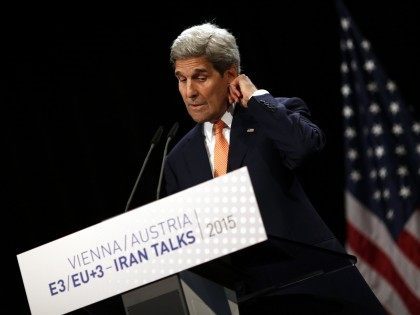
Several street art posters appeared in West Los Angeles ahead of a rally Sunday against the new Iran nuclear deal. The posters, apparently by conservative guerilla artist Sabo, The posters target the new Iran deal, though there are some that take on the latest Planned Parenthood scandal, or the Obama administration in general.

On his visit to Israel in March 2013, President Barack Obama backed Israel’s right to use force to stop Iran from building a nuclear bomb.
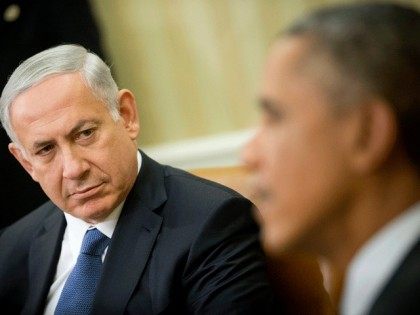
President Barack Obama is preparing to release convicted Israeli spy and former U.S. naval intelligence analyst Jonathan Pollard, the Wall Street Journal reports. Pollard has served nearly three decades of an unusually harsh life sentence, after being arrested in 1985.

In the immediate aftermath of the Iran deal, and unanimous approval by the UN Security Council, China has reportedly committed to build two nuclear power plants in Iran, according to an Iranian news source relayed via the Nikkei Asian Review and Politico Europe.

A new poll sponsored by the Los Angeles Jewish Journal reveals that a strong plurality of American Jews support the Iran nuclear deal, 49% to 31%. That compares to much smaller support among Americans in general, who split 28% to 24% for the deal.

The House Foreign Affairs Committee hosted experts on the Middle East on Thursday to examine the new Iran deal and its consequences for U.S. national security and foreign policy. Committee chair Ed Royce (R-CA) put the question to expert witnesses and fellow representatives: “[A]re temporary constraints on Iran’s nuclear program worth the price of permanent sanctions relief?”
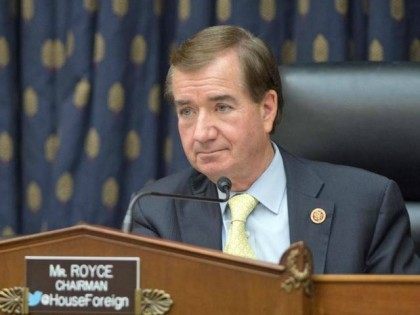
Secretary of State John Kerry, Secretary of Energy Ernest Moniz, and Secretary of the Treasury Jack Lew are making the rounds on Capitol Hill in an effort to sell the Iran deal. Their appearance at the Senate Foreign Relations Committee on Thursday did not go well, as the three men struggled to answer basic questions and objections to the substance of the deal, as well as the process through which it had been rushed to the UN Security Council before coming to Congress. There were several new revelations at the hearing. Here are the 5 most important.

Journalist Ari Shavit is one of Israel’s most celebrated left-wing voices. He is celebrated in the United States as a voice for political change in Israel and an advocate for concessions to the Palestinians. His recent memoir, My Promised Land: The Triumph

If the Iran deal were any good, the Obama administration would not have to lie about it. Yet Secretary of State John Kerry and Secretary of Energy Ernest Moniz continue to do just that. The latest example is a joint op-ed in the Washington Post, in which the Laurel and Hardy of American diplomacy attempt to defend the nuclear deal using a series of half-truths and blatant lies that is worth decoding concisely, in full.

Politifact is at it again. The so-called fact-checking authority has given Sen. Tom Cotton (R-AR) a “false” rating for his claim that President Barack Obama promised to “dismantle Iran’s nuclear program in exchange for dismantling the sanctions” at the outset of negotiations. However, it is Politifact that has its facts wrong.
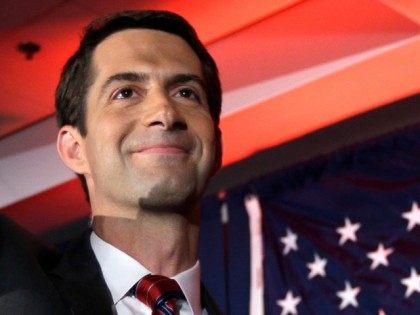
White House National Security Advisor Susan Rice admitted the existence of two secret “side deals” between Iran and the International Atomic Energy Agency (IAEA), to accompany the main Iran nuclear deal agreed last week between Iran and the P5+1 powers (U.S., Britain, France, Germany, Russia, and China).

Breitbart News is carrying the livestream of the Stop Iran Rally from Times Square in New York City today beginning at 5:30 p.m. ET.
The Obama administration has sent the Iran nuclear deal to Congress for a 60-day review provided by the Corker bill. However, President Barack Obama has pre-empted Congress by going to the UN Security Council first, which has already voted to end international sanctions and accept the deal. Furthermore, even if Congress rejects the deal, it will struggle to muster a two-thirds majority to override the president’s veto. There is one effective way, however, that the Iran deal can be rejected: states and local governments can refuse to comply with it.
On Tuesday, Sen. Dick Durbin (D-IL) delivered a strident speech on the Senate floor supporting the Iran nuclear deal. The speech is very important, for three reasons. First, Durbin is one of the Senate’s most powerful Democrats. Second, Durbin owes

President Barack Obama boasted last week that his administration forced Iran to accept an eight-year delay in the lifting of ballistic missile sanctions, when Iran wanted those restrictions canceled immediately. (Never mind that Iran made the demand at the last minute, raising a “non-nuclear” issue of the sort Obama says the U.S. could not make with regard to American captives.) Now, Obama’s brag turns out to have been a lie. There are no ballistic missile restrictions in the deal: Iran is merely “called upon” to refrain, voluntarily, from such technology.
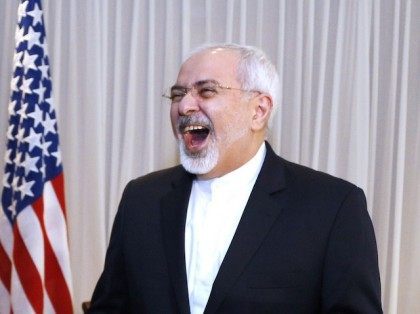
Secretary of State John Kerry told Saudi Arabia’s Al Arabiya television on Monday that Iran’s repeated threats to the United States in the aftermath of the Iran nuclear deal were “very disturbing,” but that they did not necessarily mean that Iran intended to attack America. He also suggested that despite the $150 billion in sanctions relief that Iran will receive, the Arab states of the Gulf region can unite to resist Iran.
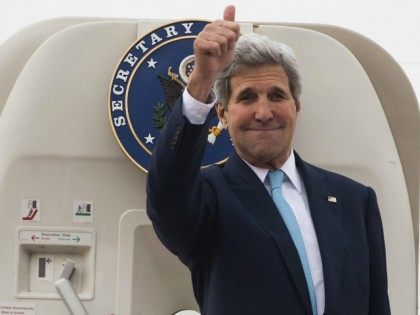
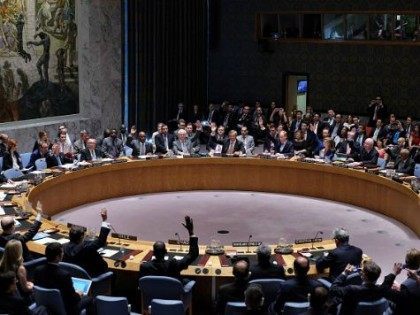
The United Nations Security Council voted 15-0 on Monday to pass Resolution 2231, which endorses the Iran nuclear deal–“the Joint Comprehensive Plan of Action [JCPOA] signed in Vienna by the five permanent members of the Council, plus Germany, the European Union and Iran.” However, there are already sharp disagreements between Iran and the rest of the world as to what that deal actually means.