Tile Adds Anti-Stalking Feature Following Apple AirTag Controversy
Following a number of reports of Apple’s AirTag tracking device being used by stalkers and thieves, rival tracking company Tile has introduced a new anti-stalking feature.

Following a number of reports of Apple’s AirTag tracking device being used by stalkers and thieves, rival tracking company Tile has introduced a new anti-stalking feature.
A recent report claims that seven newly discovered vulnerabilities in an “Internet of Things” remote management tool put a wide variety of medical devices, ATMs, and other machines connected to the internet at risk of hacking.

Researchers have discovered that Amazon Echo smart speakers can be tricked into unlocking doors, making phone calls, and purchasing items via self-issued commands. In short, the devices hack themselves through an attack nicknamed “Alexa vs. Alexa.”

Wired reports that Google’s latest privacy-invading technology can read your body language without using cameras. One Google designer ominously commented, “We’re really just pushing the bounds of what we perceive to be possible for human-computer interaction.”
Tech giant Google has disabled the live traffic data on its Maps app in Ukraine after consulting with Ukrainian officials who worry that the feature could be used to track military movements.
The Ukrainian government has reportedly called on the country’s underground culture of hackers to help protect its critical infrastructure and conduct cyberattacks and spying missions against Russian troops.
Hackers reportedly stole hundreds of non-fungible tokens (NFTs) from users of NFT marketplace OpenSea over the weekend, including NFTs from popular collections like Decentraland and Bored Ape Yacht Club.
New York City has introduced speed cameras with microphones to ticket cars that breach certain noise levels.

The New York Times recently purchased the popular online word-guessing game Wordle — and appears to have immediately added ad-tracking, sending user data not only to the Times, but also to Google and other third parties.
Recent studies have revealed that the Chinese-owned social media TikTok can bypass security protections on Apple and Google app stores to gain full access to user data.

In a recent article, Vox’s Recode outlines how Apple’s privacy update that allows users to prevent websites like Facebook from tracking them has had a massively negative effect on the social media giant’s revenue. Facebook (now Meta) relies on gaining access to the entire private lives of its users to appeal to advertisers, and Apple’s commonsense policies have caused major problems for Mark Zuckerberg and the Masters of the Universe.

A New York couple describing themselves as “serial entrepreneurs” have been arrested and charged with conspiracy to commit money laundering and to defraud the U.S. government in relation to a $4.5 billion Bitcoin heist in 2016.

A recent attack on News Corp affected publications including The Wall Street Journal, The New York Post, and more as hackers attempted to gain access to email and documents of employees and journalists. Cybersecurity consultants hired by the company claim the hack comes from China and was designed to “collect intelligence to benefit China’s interests.”

Facebook stated as part of its earnings release on Wednesday that the consumer privacy measures recently taken by Apple have made it harder for Mark Zuckerberg’s empire to track every detail of its users’ lives, which will cost the social media giant $10 billion in 2022 due to a decrease in the ability to target advertisements.

Russian hackers appear to have found a new way to get their hands on inside information to profit on stock trades. Rather than hack the actual companies, they allegedly targeted two firms — with which thousands of public companies use to make electronic filings — for market-moving information, prosecutors say.

According to a recent report from the Federal Trade Commission, social media scammers had a record year for ripping off Americans, stealing approximately $770 million in 2021.

Google is facing yet another lawsuit, with the latest multistate suit alleging that the company is engaging in “deceptive” location tracking. Washington DC Attorney General Karl Racine said: “Google falsely led consumers to believe that changing their account and device settings would allow customers to protect their privacy and control what personal data the company could access. The truth is that contrary to Google’s representations it continues to systematically surveil customers and profit from customer data.”

Popular cryptocurrency trading platform Crypto.com announced this week that it lost around $34 million worth of customers’ cryptocurrency in a recent hack.
Facebook (now called Meta) is facing a $3.2 billion lawsuit over the alleged exploitation of its UK users. One expert involved in the lawsuit said: “They are exploiting users by taking their personal data without properly compensating them for taking that data. I don’t think the users are entirely clear when they click on the terms and conditions how unfair that deal is.”

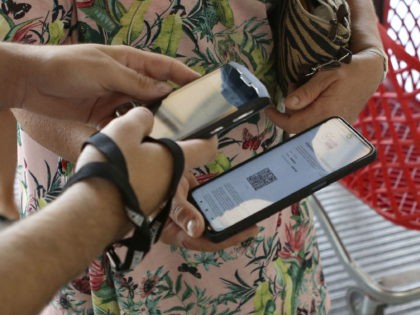
Scammers have reportedly begun placing fake QR codes on parking meters to trick people parking their vehicles into sending their cash to the scammers. Fake QR codes have been located in multiple cities in Texas including Austin, Houston, and San Antonio.
Norton 360, one of the most popular security suites on the market, has reportedly begun installing a cryptocurrency mining program on its customers’ computers. Although the cryptominer is opt-in, the company is facing considerable backlash from customers who expect features like antivirus, not a tool to use their hardware (and electricity) in the hopes of generating digital currency.
Theft of NFTs (Non-Fungible Tokens) appears to be on the rise, with many collectors losing millions of dollars as a result. In one recent example that led to widespread mockery, an NFT investor complained “all my apes are gone,” referring to the popular “Bored Apes” and “Mutant Apes” NFTs they had invested in.

The Chinese Communist Party is increasingly using advanced technological tactics to track down China critics on Twitter and Facebook, even when dissidents make use of anonymous accounts, according to a new report in the New York Times.

Criminals are continuing to use Apple AirTag tracking devices to track and target victims in crimes ranging from car theft to stalking. One cybersecurity expert commented: “I don’t think there’s any question that Apple’s AirTags are being used for stalking.”

A security researcher appears to have discovered major security flaws in an internet gateway used by hundreds of hotels to manage their gues WiFi networks that could put the personal information of guests at risk.
The UK National Crime Agency and National Cyber Crime Unit have donated a database of 225 million stolen emails and passwords to HaveIBeenPwned (HIBP), allowing users to check if their details have been leaked.
Hackers enjoyed incredible windfalls by hacking cryptocurrency exchanges in 2021. Six of these cyberattacks netted crooks more than $100 million in each theft. The largest cyberattack on a crypto platform occurred in December when hackers stole at least $200 million from Bitsmart.
Amazon reportedly filed a patent recently that suggests its Ring doorbell cameras may soon be able to identify “suspicious” people by scanning their skin texture, walking style, and voice. This represents the latest in Amazon’s growing push into biometric data collection.

Facebook (now known as Meta) has banned seven “Surveillance-For-Hire” companies that it claims spied on 50,000 users including human rights activists, government critics, celebrities, journalists, and more in over 100 countries.

Google is notorious for tracking and monitoring its users but following public scrutiny, the company has made it easier to control the data it collects on you. Americans should take steps to protect their privacy before traveling for the Christmas holiday.

Private Health Info of 40+ Million Americans Was Exposed in 2021

According to a recent police bulletin, car thieves are using the $29 AirTag devices produced by Apple to track cars they have targeted for theft. Crooks apply the AirTags to target vehicles in public places, then use the tracker to follow their victims home, where they then steal the vehicle.
A new Zoom feature will allow meeting hosts and co-hosts to use calendar integrations from Google and Microsoft to see if attendees joined their meeting on time.

Hackers are reportedly sending “antiwork” manifestos to receipt printers at businesses worldwide, taking over the common transaction record to spread their political propaganda.

Australia reportedly plans to introduce new legislation that would force social media giants to provide the personal details of users who post defamatory comments.

According to a recent analysis by Microsoft, hackers are extremely unlikely to attempt a “brute-force” attack user passwords longer than 10 characters. 77 percent of brute force hacking attempts were on passwords with seven or less characters, according to the study.
A scammer reportedly managed to lock down the account of Instagram head Adam Mosseri by pretending that the executive was dead. Some scammers offer to shut down a targeted individual’s account by using “random obituaries” to show the Facebook-owned platform they are dead for as little as $60.
In a recent article, Wired magazine outlines how Amazon has lost control of its vast collection of user data and failed to protect its customers’ personal information from “internal threat actors,” among others.

In a recent article, Wired outlines how individual cryptocurrency traders across Twitter are becoming detectives to track down scammers and thieves who are stealing cryptocurrency from unsuspecting investors.

According to a recent report, the hackers behind the recent data breach of the online trading platform Robinhood had access to system tools that would allow them to remove certain account security features of customers.