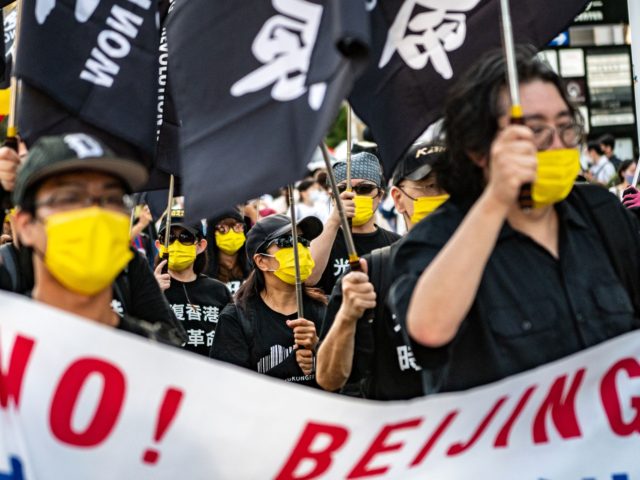

Japan’s legislature passed a resolution on Tuesday “expressing concern” over China’s human rights violations in a document which failed to “directly mention China or use the term ‘human rights abuses,'” the Japan Broadcasting Corporation (NHK), reported.
The resolution passed by Japan’s house of representatives on February 1 “cites infringements of freedom of religion and forced incarceration in those regions,” according to NHK.
“We regard changes to the status quo by force, symbolized in the serious human rights situations, as a threat to the international community,” the resolution read.
“While the resolution doesn’t directly mention China or use the term ‘human rights abuses,’ it says Japan acknowledges that forced changes to the status quo threaten the global community, and calls for an explanation to the rest of the world,” the public broadcaster observed.
The resolution referred to the Xinjiang Uyghur Autonomous Region, the Tibet Autonomous Region, the Inner Mongolia Autonomous Region, and Hong Kong according to reports on February 1 by both NHK and Kyodo News.
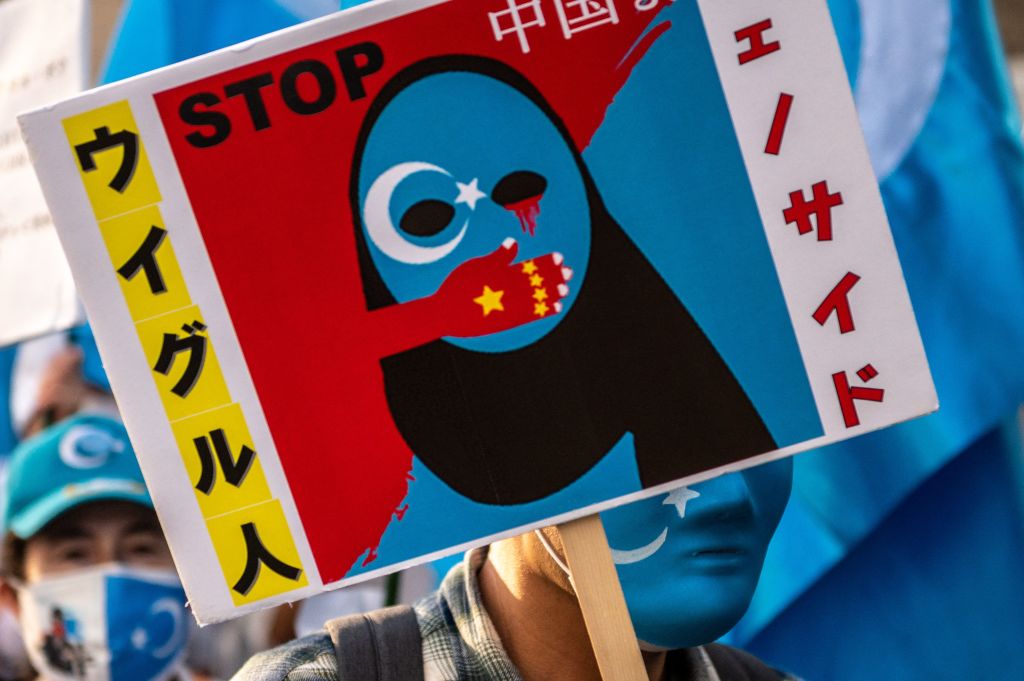
Activists take part in a protest calling for a boycott of the Beijing 2022 Olympic Games over China’s human rights record, in Tokyo on October 2, 2021. (PHILIP FONG/AFP via Getty Images)
The document used Beijing’s official names for Xinjiang (a region in westernmost China its inhabitants call East Turkistan), Tibet (a Himalayan region occupied by China since about 1950), and Inner Mongolia, which borders the nation of Mongolia. Beijing also has its own official name for Hong Kong, “the Hong Kong Special Administrative Region of the People’s Republic of China (HKSAR),” though it remains unclear if the Japanese resolution used this label to refer to the metropolis.
Hong Kong is a city under increasing rule by the Chinese Communist Party, though its residents traditionally enjoyed limited civil liberties under a de facto constitution known as the “Basic Law.” This document came into effect in July 1997 after Great Britain returned the former British colony of Hong Kong to Chinese rule.
The Basic Law allowed Hong Kong to operate under a “One Country, Two Systems” policy which considered the city a part of China while acknowledging that it had its own select freedoms established by a separate legal system. China has flagrantly violated “One Country, Two Systems” by using Hong Kong police to enforce Beijing-based laws against freedom of expression.
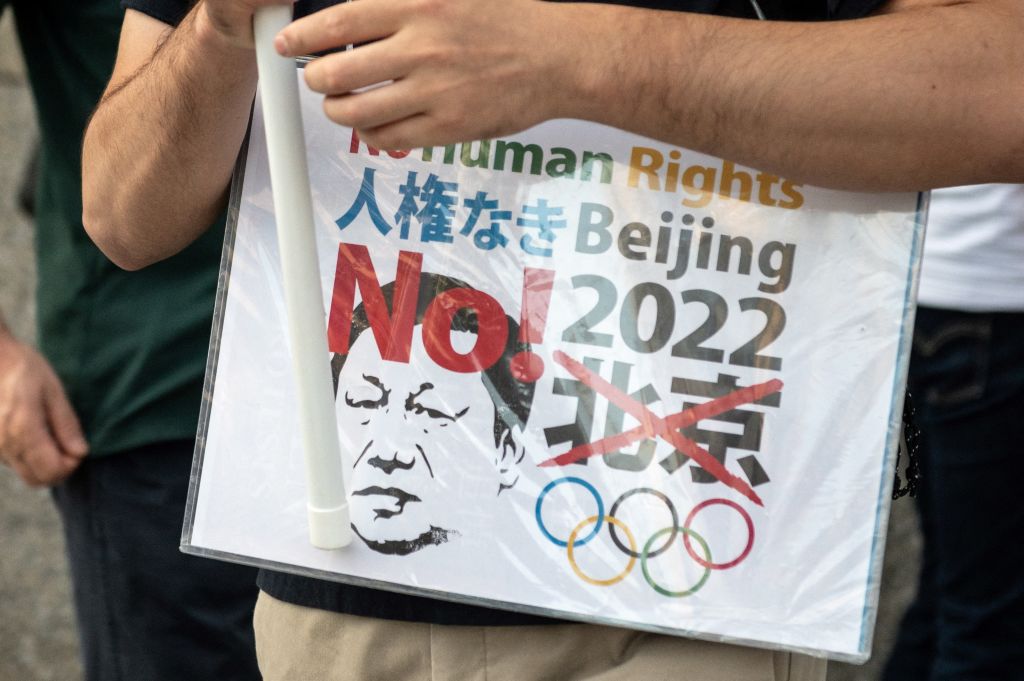
Activists take part in a protest calling for a boycott of the Beijing 2022 Olympic Games over China’s human rights record, in Tokyo on October 2, 2021. (PHILIP FONG/AFP via Getty Images)
Xinjiang is located at the crossroads of China, an East Asian nation, and Central Asia. The frontier region contains significant ethnic minority populations with roots in Central Asia including the Uyghurs, Kazakhs, and Kyrgyz people.
Starting in about 2017 the Chinese Communist Party began placing Uyghurs in state-run internment camps throughout Xinjiang and has detained 1-3 million such people in the facilities since then, according to estimates by human rights groups. Inner Mongolia, like the country of Mongolia, is home to Mongols, or members of an ethnic group distinct from the Han Chinese.
The Chinese Communist Party has officially ruled Tibet, an eastern Himalayan territory bordering Nepal, since it invaded the region in about 1950. Prior to that invasion, Tibet was ruled for centuries through a Buddhist religious hierarchy headed by the Dalai Lama, or a dual spiritual-state leader.
COMMENTS
Please let us know if you're having issues with commenting.