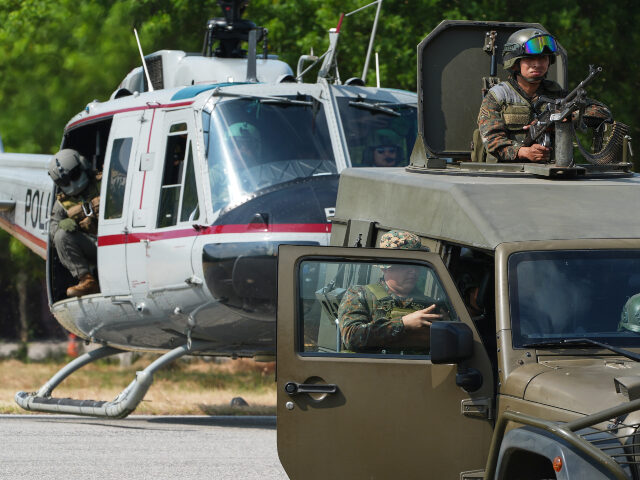

The government of Guatemala declared a state of emergency in the eastern departments of Zacapa and Izabal over the weekend after a wave of violence left a lawmaker and several policemen and civilians dead over the past days.
President Bernardo Arévalo signed the decree on Saturday proclaiming a 30-day emergency period in Zapata and Izabal in response to what it described as activities linked to drug-trafficking and transnational criminal structures representing a threat to the local population and authorities.
Speaking to the nation on Sunday night, President Arévalo stressed that for decades criminal structures linked to drug trafficking have attempted to impose their interests through violence and intimidation. He emphasized, “These criminal structures want us to surrender, but I want to clearly tell you something, they have not and will not achieve it.”
“That is why, yesterday, November 14, we decreed a state of emergency in the Departments of Zacapa and Izabal for a period of 30 days,” he said, adding that the extraordinary decision is based on intelligence reports from the nation’s security authorities and on the need to guarantee the safety of local communities. (A department in Guatemala is similar to a state or province.)
The emergency decree immediately — and throughout its duration — restricts freedom of movement, assembly, and demonstration in the two departments, while also eliminating the requirement for a court order for arrests and searches, among other prerogatives. According to Infobae, the Guatemalan Defense Ministry deployed some 600 personnel to the two departments to bolster the ranks of the security forces deployed in the area.
“I want to speak directly to the families of Zacapa and Izabal. We know that you want to live in peace, work, study, care for your families, and build a future with peace of mind. Ensuring that you can do so is our priority,” President Arévalo said towards the end of his address.
“I ask for your trust and cooperation, and that you remain vigilant and stay informed through official channels,” he continued. “Zacapa and Izabal belong to their residents, their families, and their communities. They do not belong to the criminals who seek to impose fear and violence.”
The Central American nation has experienced an intense surge in violence since September, particularly in Zacapa, a region some 90 miles northeast of the capital Guatemala City long described as a transit hub for drugs bound to Mexico and the United States and one of the two regions covered by the emergency decree.
On November 6, a group of armed individuals shot and killed lawmaker Julio César Portillo Paz and three police officers while they were aboard a vehicle in the Zacapa municipality of Río Hondo. In October, former anti-corruption prosecutor Juan Francisco Solórzano was shot dead at a soccer field in Guatemala City.
Hours before the emergency proclamation, a new massacre in El Tocino, Zacapa, reportedly left at least five dead, three women injured, and one man kidnapped after a group of masked assailants stormed a local community, leading to an intense shootout between the armed men and law enforcement agents. Additionally, a similar but separate attack left two men dead in front of a park in Puerto Barrios, Izabal.
President Arévalo’s emergency declaration comes just hours after the administration of President Donald Trump designated the dangerous Guatemalan drug trafficking gangs Los Lorenzanas, Los Huistas, and Los Mendoza as Foreign Terrorist Organizations (FTOs) and Specially Designated Global Terrorists (SDGTs). Secretary of State Marco Rubio pointed out that Los Lorenzanas, in addition to being one of the most powerful Guatemalan drug trafficking gangs, is responsible for numerous acts of violence.
President Arévalo referred to the U.S. designations in his Sunday night address, describing them as the product of a decision that confirms the importance of addressing a threat that transcends Guatemala’s borders and strengthens international cooperation in the fight against organized crime.
The Guatemalan newspaper La Hora reported that at least four other individuals were killed in Zacapa during the hours immediately following the signing of the emergency decree. Although initial assessments from Guatemala’s National Civil Police (PNC) reportedly indicate that the four killings have no relation to the drug-trafficking organizations mentioned by President Arevalo’s decree, the officials did not rule out the possibility that they were “direct attacks stemming from local or specific conflicts.”
Christian K. Caruzo is a Venezuelan writer and documents life under socialism. You can follow him on Twitter here.
COMMENTS
Please let us know if you're having issues with commenting.