Bidenflation Cranks Up to New Record High in Empire State Manufacturing Survey
No sign of inflation pressures becoming “transitory” in the New York Fed’s manufacturing survey.
No sign of inflation pressures becoming “transitory” in the New York Fed’s manufacturing survey.
Real hourly compensation fell at an annualized rate of 4.6 percent in the first quarter.
Texas manufacturing activity unexpectedly slowed significantly in August, data from the Federal Reserve Bank of Dallas showed Monday. The production index of the Dallas Fed’s Texas Manufacturing Outlook Survey plummeted to 20.8 in August from 31.0 in July. The index
Bidenflation spreading in the lastest manufacturing survey from the Kansas City Fed.
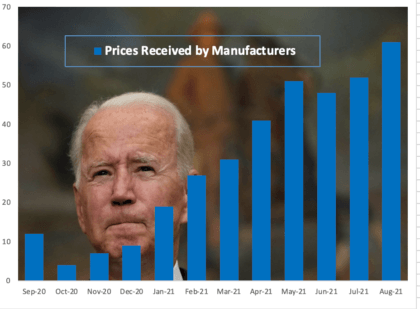
Manufacturing activity slowed in August but the gauge of prices for goods rose to a new record high.
The latest survey suggests that a slowdown in growth has not slowed down price increases.
Record setting price increases did not spur an acceleraton of manufacturing activity in August, a survey from the New York Fed showed Monday.

Texas manufacturers say prices are still rising and they expect them to keep going up.

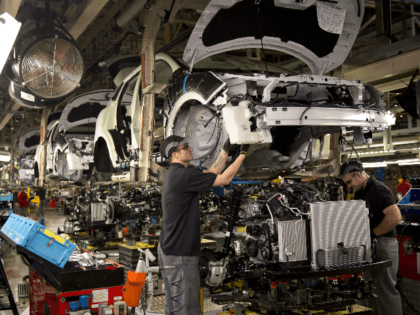
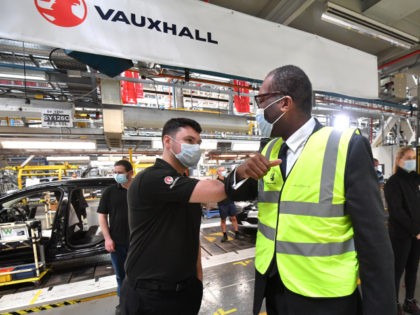
Another car company has pledged further investment in Brexit Britain’s car plants, after Vauxhall owner Stellantis announced it would be investing £100 million to build electric vehicles at its Cheshire plant.
Inflationary pressures continue to run at near-record highs in the central Atlantic region of the U.S. in June, data from a survey from the Federal Reserve Bank of Kansas City showed Tuesday.

Inflationary pressures in hte Philly Fed survey are at levels we haven’t seen since the Carter years.

If we agree to call it “transitory,” will the pain stop?
Both prices paid and prices received by Kansas City Fed district manufacturers hit all-time highs in May.

Inflationary pressures glared out from the Richmond Fed’s monthly manufacturing report.

There are signs that the economy is at risk of overheating as demand outraces supply that to Biden’s huge deficit spending bill.
Manufacturing output rose just 0.4 percent in April, compared with expectations for a 1.8 percent gain, the Federal Reserve said Friday.
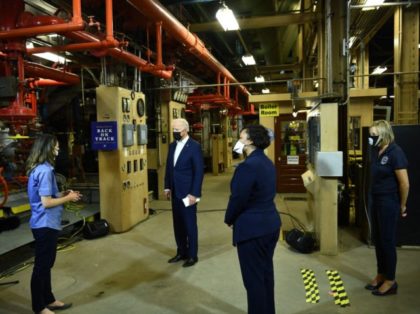
U.S. factory orders rose 1.1 percent in March, the Commerce Department said Tuesday. That was below the 1.3 percent increase expected by analysts but above the 0.8 percent contraction amid February’s harsh weather.
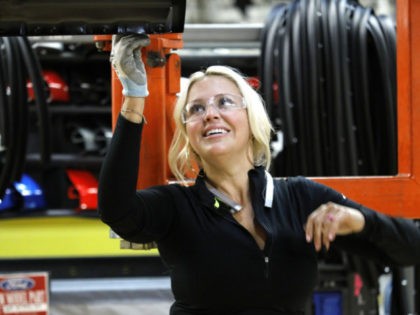
Worker shortages, chip shortages, and rising materials costs may be holding back expansion in U.S. factories.
The reopening triggered a surge in factory activity in Texas but high unemployment benefits are making workers scarce.
The strength of the U.S. economy as it reopens may become a stumbling block for the Biden administration’s big spending plans—which were partially based on the idea that the economy would need government aid to continue to grow.
The Kansas City Fed’s manufacturing survey’s composite index jumped to 31, up from an already elevated 26 in March. That is the best reading in the survey’s history.

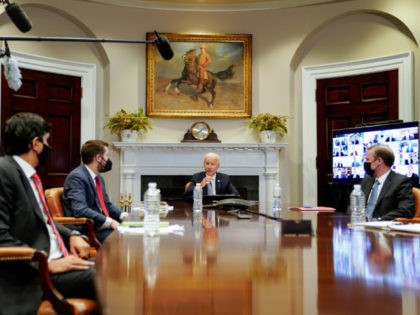
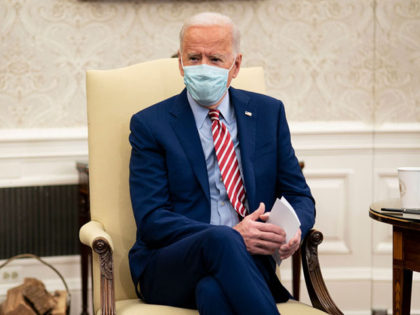
President Joe Biden failed to offer any short-term solutions to the semiconductor shortage in the United States, choosing instead to promote his multi-trillion-dollar spending plan on Monday. Biden joined a White House video conference meeting Monday afternoon with his advisers
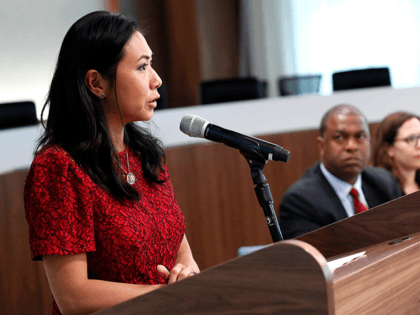
Rep. Stephanie Murphy (D-FL) holds a patent for women’s softball pants that her husband’s company manufactures in China.
Manufacturing activity exploded higher in March, fueled by strong growth in new orders, the clearest sign that the economy was ready to boom prior to the stimulus package passed last month and may now be at risk of overheating.
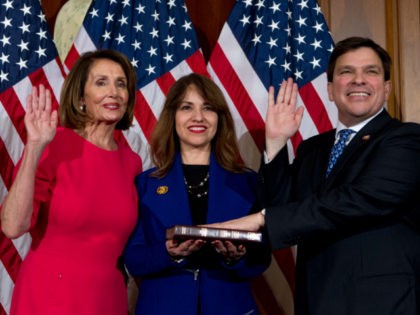
On Wednesday’s broadcast of the Fox Business Network’s “Cavuto: Coast to Coast,” Rep. Vicente Gonzalez (D-TX) said that the U.S. should invite American businesses who manufacture in China “to go down to these Northern Triangle countries and have these operations
The Dallas Fed said manufacturing expanded at “a markedly faster pace, with its manufacturing index rocketing to the highest reading in its 17-year history.
Durable goods orders were weaker than expected in February, perhaps driven down by harsh winter weather.

The economy is accelerating more rapidly than expected.
The Philly Fed’s manufacturing activity index soared to 51.8 in March from 23.1 in the prior month. That’s the best reading since 1973.

The Fed said severe winter weather in the south central region of the country in mid-February accounted for the bulk of the decline.
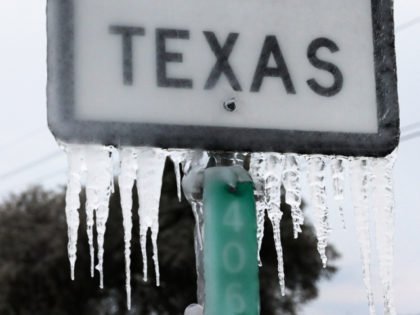
U.S. factory orders rose by a sizzling 2.6 percent in January to $509.4 billion, data released by the Commerce Department Thursday showed.
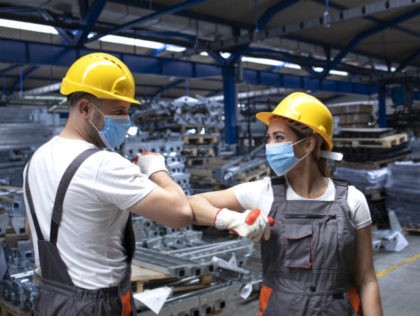
The ISM Manufacturing Report on Business PMI stood at 60.8 in February, up from 58.7 in January. That’s the highest level since August 2018 and indicates a powerful expansion for the manufacturing sector.

The Tenth District Manufacturing Survey’s composite index climbed to 24 in February, up from 17 in January. Economists had forecast a mild decline to 15.

Orders for durable goods rose 3.4 percent in January compared with December. The prior month was also revised up to show a 1.2 percent gain from November.
Orders for consumer goods were particularly strong as 2020 came to a close.
U.S. factories continued to expand production for the eighth month straight in January.
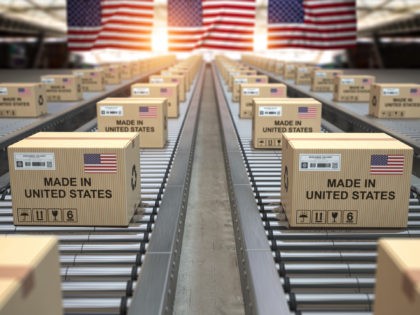
Chinese state media bristled after a Monday press conference at the White House in which press secretary Jen Psaki described China as “authoritarian” and “assertive,” grumbling that the Biden team seems to have a “virtually identical” attitude toward Beijing as the Trump administration did.
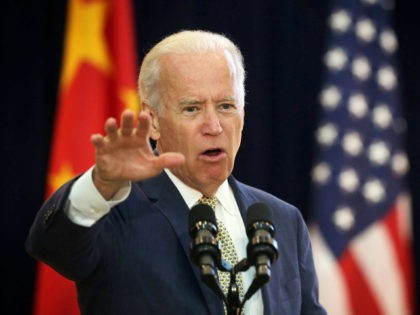
The Dallas Fed’s survey registered the eigth consecutive month of growth in January but the pace of expansion slowed significantly.

Brexit Britain has enjoyed a slew of good news stories in manufacturing, on top of Nissan’s high-profile commitment to expanding operations in the country.
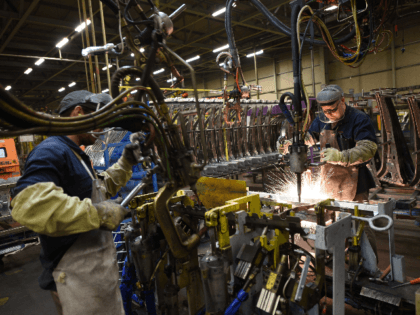
Nissan’s chief operating officer has said that Brexit “is a positive” for the carmaker, and that it will be moving battery production from Japan to Britain.