Inside the U.S-Iran Negotiations: Iran Failed to Meet U.S. on 6 Key Red Lines
Iranian negotiators failed to meet the United States on six of its key red lines during talks in Islamabad, Pakistan, over the weekend, according to a U.S. official.

Iranian negotiators failed to meet the United States on six of its key red lines during talks in Islamabad, Pakistan, over the weekend, according to a U.S. official.

President Donald Trump is placing a 50 percent tariff on all goods from countries that sell weapons to Iran on the heels of the two-week ceasefire announced Tuesday night.

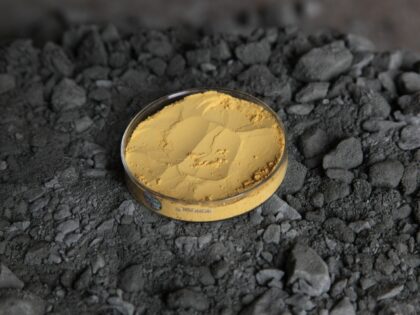
President Donald Trump is seriously weighing a military operation to extract nearly 1,000 pounds of highly enriched uranium from Iran, insisting Tehran must surrender what he called the regime’s “nuclear dust” or face annihilation, according to a report published Sunday night.

More than quick, aggressive military action, strategy would be necessary to defeat the South. Winfield Scott’s “Anaconda Plan” aimed to strangle the South economically through a naval blockade and other means. Similarly, the air war in Iran, which has been brilliantly executed, led some to have high hopes for a swift victory through decapitation.

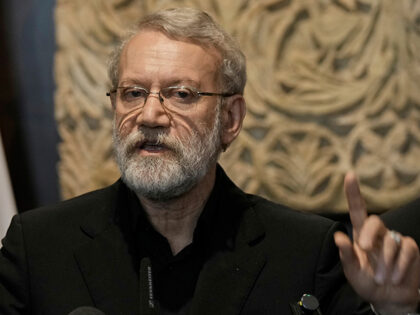
Iranian Supreme National Security Council Secretary Ali Larijani – seemingly the de facto leader of Iran following the liquidation of Ayatollah Ali Khamenei in Operation Epic Fury – insisted on social media that he will never negotiate with the United States, but there were reports on Sunday that Larijani has quietly reached out through intermediaries in Oman to resume nuclear talks.

Iranian Foreign Minister Abbas Araghchi claimed on Thursday that an “understanding” was reached on “most elements of a potential agreement with the U.S.” during talks in Geneva, Switzerland, but no major breakthroughs were announced.

The United States and Iran began the third round of their current cycle of indirect nuclear talks in Geneva, Switzerland on Thursday, under the looming threat of U.S. military action and Iran’s belligerent threats to respond with attacks across the Middle East.

A senior Iranian official said concessions on uranium enrichment could be offered, but only if the U.S. meets Iran’s demands on sanctions.

Iranian Foreign Minister Abbas Araghchi said on Tuesday that the latest round of talks with the United States in Geneva yielded a mutual understanding of “guiding principles” for even more talks.

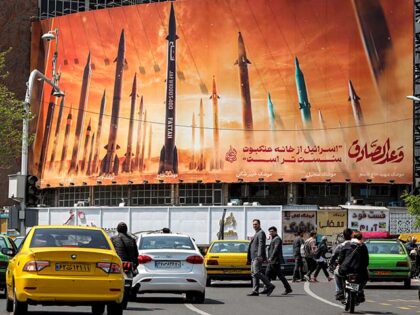
Iran’s Ayatollah Ali Khamenei claims his military has weapons capable of sending an American aircraft carrier “to the bottom of the sea.”

U.S. envoy Steve Witkoff and Iranian Foreign Minister Abbas Araghchi held their planned talks in Oman on Friday, despite some last-minute demands from Iran that threatened to derail the process.

The Iranian Foreign Ministry declared during its regular press briefing on Monday that it “expect[s]” United Nations member countries to simply ignore the reimposition of sanctions on the rogue Islamist regime the Security Council approved in late September.

Iranian President Mahmoud Pezeshkian, who is subservient to “supreme leader” Ayatollah Ali Khamenei, spent much of his Wednesday meeting with European leaders, pressuring them not to implement “snapback” measures that would restore sanctions on his country over its illicit nuclear development.

Russia is reportedly prepared to use its position as a permanent member of the U.N. Security Council (UNSC) to protect Iran from “snapback” sanctions, which European leaders are threatening to invoke because Iran has failed to comply with its obligations under former president Barack Obama’s 2015 nuclear deal.
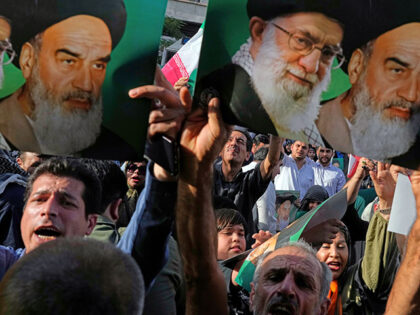
Iran’s “supreme leader,” dictator Ayatollah Ali Khamenei, delivered a speech on Sunday demanding complete submission from the Iranian people.

The U.S. Department of Energy announced this week that it has made an initial selection of 11 projects to develop high-tech nuclear test reactors, part of the Trump administration’s ambitious plans to rebuild a domestic nuclear supply chain and quadruple U.S. nuclear energy output by 2050.

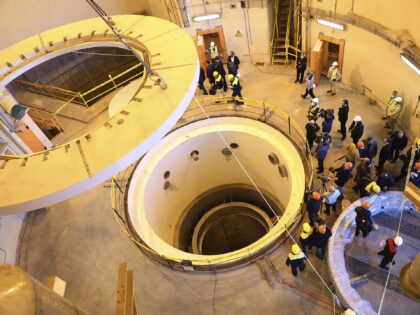
Iranian Foreign Minister Abbas Araqchi said on Tuesday that the uranium enrichment facility at Fordow was “seriously and heavily damaged” by U.S. bombers on June 21. He said Iranian officials are still assessing the full extent of the damage.

Maj. Gen. Yahya Rahim-Safavi, senior military adviser to Iranian Supreme Leader Ayatollah Ali Khamenei, on Monday claimed Iran was capable of far more devastating retaliatory strikes against the U.S. and Israel than it has been able to launch thus far, and Iran is ready to attack targets beyond the Middle East if necessary.

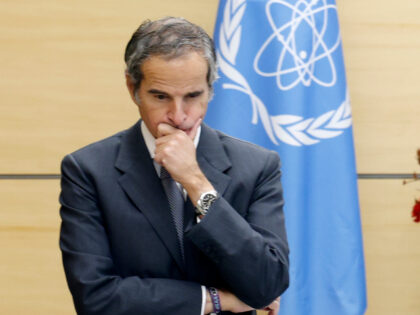
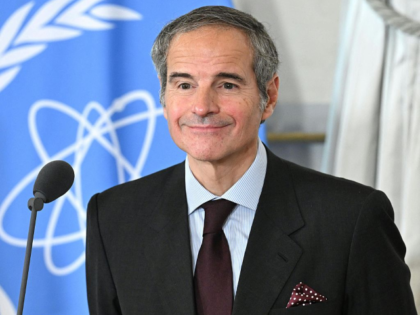
International Atomic Energy Agency (IAEA) Director-General Rafael Grossi said on Sunday that Iran could conceivably resume enriching uranium in a “matter of months,” although he resisted putting an exact timetable on the resurrection of Tehran’s nuclear weapons program after U.S. and Israeli airstrikes.

International Atomic Energy Agency (IAEA) Director-General Rafael Grossi said on Thursday that Iran’s heavily-fortified uranium enrichment plant at Fordow is “no longer operational” after a massive U.S. airstrike.

Iranian officials chanted “Death to America” as they voted to expel nuclear inspectors and accelerate uranium enrichment, following President Donald Trump’s bold strike on Tehran’s nuclear infrastructure — a move that also helped force a ceasefire and avert a prolonged regional war.

The IAEA does not know the whereabouts of Iran’s enriched uranium stash, which could include up to 900 pounds of near-weapons-grade material.

Iran claims it is already making plans to restore its nuclear industry after heavy airstrikes by Israel and the United States.
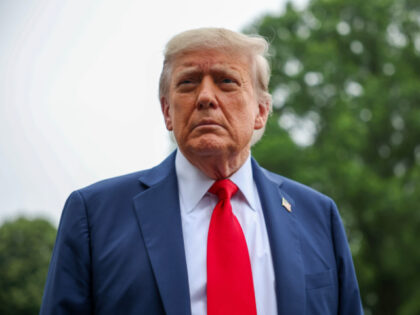
Iranian officials vowed to get revenge for this weekend’s U.S. airstrikes against their illegal nuclear program by launching terrorist attacks, and pledged to resume enriching uranium as quickly as possible.

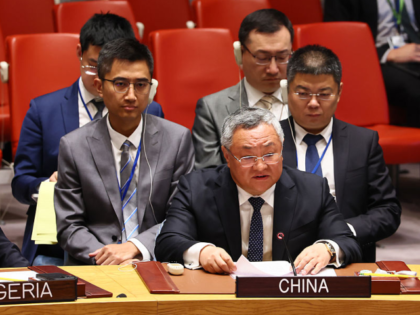
The Chinese Communist Party, alongside Russia and Pakistan, spearheaded efforts on Sunday to pass a resolution at the United Nations Security Council condemning attacks on Iran’s illicit nuclear facilities.

The genocidal jihadist terror organization Hamas issued a statement late on Saturday condemning President Donald Trump for greenlighting a series of airstrikes on Iran’s largest uranium enrichment sites, calling it a “dangerous escalation.”

President Donald Trump announced in a White House address on Saturday night that the United States had conducted “massive precision strikes” to destroy Iran’s three key nuclear enrichment sites, declaring them “completely and totally obliterated.”

On Friday’s broadcast of “CNN News Central,” Sen. Chris Coons (D-DE) stated that it’s now time for the U.S. to call for the total end of Iranian uranium enrichment “and to say that the inspections would be broader, deeper, more

President Donald Trump said Friday that sometimes “toughness” is required to achieve peace when he was asked about the situation in Iran.

President Donald Trump issued a message Thursday that Iran has “within the next two weeks” to negotiate with the United States.

Iranian Foreign Ministry spokesman Esmail Baghaei on Thursday blasted the U.N.’s International Atomic Energy Agency (IAEA) and its director, Rafael Grossi, for condemning Iran’s nuclear program.

President Donald Trump said Thursday the Wall Street Journal “has no idea what” his thoughts on Iran are after the outlet reported he has authorized attack plans.

President Donald Trump made clear Wednesday the administration is “not looking for a long-term war” with Iran.

WASHINGTON — President Donald Trump told reporters that “nobody knows what I’m going to do” regarding a potential U.S. strike on Iran’s nuclear facilities, and that he remains open to negotiations with Iran.

Vice President JD Vance said Tuesday that President Donald Trump “has earned some trust on” the issue of Iran’s uranium enrichment, and Trump would only use the U.S. military in the interests of the American people.

On Thursday’s broadcast of Newsmax TV’s “Greg Kelly Reports,” Sen. Ted Cruz (R-TX) stated that Iran made the Israeli strikes on it “inevitable” by vowing to expand enrichment, “And the effect of that was a giant middle finger to President

The Islamic Republic of Iran enthusiastically condemned the International Atomic Energy Agency (IAEA), a United Nations oversight body, on Thursday for passing a resolution condemning Iran’s illicit nuclear development — and announced plans to build a new uranium enrichment facility.

A report by the International Atomic Energy Agency (IAEA) whose contents were revealed by multiple international media outlets this weekend expressed “serious concern” with the rapid rate of Iran’s uranium enrichment, which it reportedly claimed was enough to make one nuclear bomb a month in the past three months.

The Islamist regime governing Iran declared on Monday that it would make “no slightest compromise” on enriching uranium in talks with the United States, dismissing a core demand from Washington after five rounds of nuclear talks.

Four rounds of talks with a team of American diplomats have done nothing to soften Iran’s position on ending its illicit nuclear weapons development, Iranian officials insisted on Thursday.