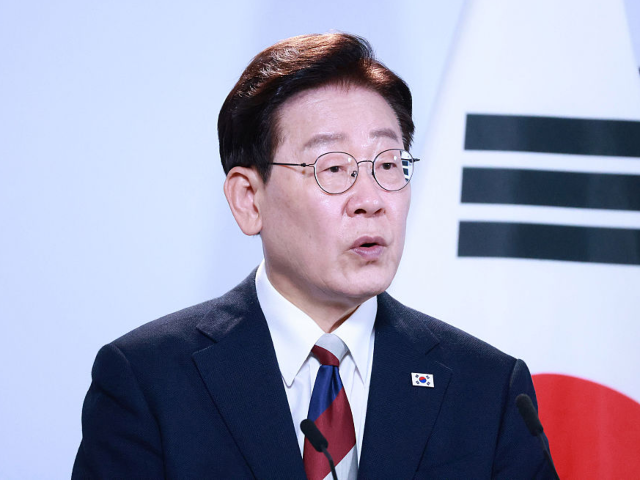

The government of South Korea announced Thursday it would recall its ambassador to Kyiv because it considered an apology from Ukraine for revealing its transfer of captured North Korean soldiers to the Asian country insufficiently contrite.
The announced arrived two days after the British newspaper The Guardian published a report accusing South Korean fuel companies of shipping diesel and other fuel to Russia, potentially undermining the efforts of its presumed ally Ukraine to fight off a four-year Russian invasion of its territory. The South Korean government, led by leftist President Lee Jae-myung, issued a response to the report in which it claimed that the shipments the newspaper documented did not violate South Korean law, but that if it found any legal violations, it would address them.
The report surfaced after weeks of Seoul publicly condemning the Ukrainian government, which it supported enthusiastically during the tenure of conservative former President Yoon Suk-yeol, for revealing that North Korean soldiers captured alive fighting for Russia had been sent to the South. Ukrainian President Volodymyr Zelensky announced the transfers during his speech before the United Nations General Assembly in September, stating that at least one of the two men sent to the South “tried to kill himself” when captured and was “shocked that fate didn’t let him die.”
“Recently, we sent two North Korean prisoners of war to the Republic of Korea. These guys are not easy to capture alive,” he revealed. “One of them, when he realized he was going to be taken prisoner, tried to kill himself. And he was shocked that fate didn’t let him die. This is how they raise people in the North. It’s reality.”
The Lee government repeatedly condemned the exposure, claiming that the Ukrainian government had insisted that South Korea agree to keep the transfer confidential before it occurred, and before it allegedly unilaterally broke that agreement. Lee himself published statements on social media condemning the Ukrainians for allegedly making him “out to be a liar” and threatening the war-torn country.
“If you continue to refuse to acknowledge the facts and issue a public apology, we will take additional measures,” he warned. “As this is a matter concerning the honor of the Republic of Korea’s people and nation, we cannot overlook it.”
South Korean Foreign Minister Cho Hyun conceded on Tuesday that Ukrainian authorities had apologized for the revelation, but on Thursday announced the South would pursue diplomatic consequences anyway as it saw the apology as insufficient.
“The government has decided to recall its ambassador to Ukraine to Seoul,” the Foreign Ministry announced. “We hope that various issues between the two countries will be resolved smoothly, and we will continue consultations with the Ukrainian side to that end.”
The Ukrainian state news site Ukrinform noted that Ukrainian presidential adviser Dmytro Lytvyn had publicly denied there was any confidentiality agreement covering the fate of the North Korean soldiers.
“South Korea later received a message from Ukraine apologizing for disclosing information about the transfer of the two North Korean prisoners of war to Seoul. However, the apology did not meet the expectations of the South Korean government,” Ukrinform added.
The Korea JoongAng Daily connected the timing of the ambassador recall to the Guardian story — a fact that would make it so Ukraine could not summon the South Korean ambassador to complain about the fuel sales. It also claimed that a subsequent statement following the South Korean government’s initial response to the Guardian claimed that “no fuel exports to Russia have officially cleared customs from last year through this August, though it added that petroleum products are not subject to its export controls anyway.”
“The list of controlled goods is determined through interagency discussions after comprehensively considering every item’s potential military use, economic impact, and international coordination,” a joint statement from various South Korean government industries insisted.
The original Guardian report claimed that port records showed that “in July and August over 176,000 tonnes of fuel, mostly diesel, was loaded at several South Korean ports onto seven tankers that made 14 voyages to Russia’s far east.”
“It is unclear who owned or sold the fuel, which South Korean port records do not show,” the report observed. “According to data from the maritime analytics firm Kpler, the buyers included Rosneft, Russia’s state-controlled oil company, which is under UK, U.S., EU and Australian sanctions, and NNK, a Russian oil group whose owner, Eduard Khudainatov, and one of its companies, NNK-Oil, are under UK sanctions.”
Public statements from neither the governments of Ukraine nor South Korea indicated that the diplomatic dispute was related to the alleged oil shipments. Ukrainian Presidential Commissioner for Sanctions Policy Vladyslav Vlasiuk did issue a public statement lamenting the report, however, arguing that it stood “in stark contrast to South Korea’s sanctions policy [toward Russia].”
“[South Korea’s] shipments [to Russia] began precisely when Ukrainian strikes… reduced refining volumes in Russia, causing fuel shortages,” Vlasiuk wrote in a social media message. “Imports from South Korea effectively helped offset the impact of Russia’s loss of domestic refining capacity.”
COMMENTS
Please let us know if you're having issues with commenting.