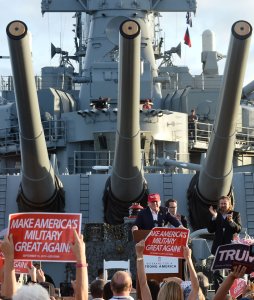

Nov. 21 (UPI) — President Donald Trump’s plan to build a new fleet of nuclear-powered battleships is driving up the projected cost of expanding the U.S. Navy by billions of dollars, according to a congressional report released Thursday.
The Congressional Budget Office estimated the Navy’s 30-year shipbuilding plan would cost an average of $53.8 billion annually.
The costs are about 18% more than the Navy’s own estimates and 41% above average annual appropriations over the past five years.
The proposed purchase of 15 so-called “Trump-class” battleships accounts for a substantial portion of the additional costs, with each vessel estimated to cost $18.3 billion.
The findings come as the Navy faces mounting pressure from prolonged deployments supporting the war in Iran.
Acting Navy Secretary Hung Cao said the war in Iran was straining the fleet.
“This war, again, I know it’s a strain on our navy,” Cao said during a Senate confirmation hearing Wednesday.
Trump announced plans for the new battleships in December 2025 as part of his proposed “Golden Fleet,” promising to revitalize American shipbuilding and strengthen U.S. military power.
The president initially called for construction of two battleships, followed by eight more, with the possibility of eventually building as many as 20 or 25.
“They will be the fastest, the biggest and by far, 100 times more powerful than any battleship ever built,” Trump said at the time.
The Navy’s current shipbuilding proposal includes 15 nuclear-powered battleships. The CBO report said the move would concentrate substantial firepower in a relatively small number of vessels, conflicting with the Navy’s stated goal of distributing weapons across a larger fleet.
The report also found earlier shipbuilding estimates had underestimated costs because some vessels proved more complicated to design and build than anticipated.
Meanwhile, the Iran war has forced the Navy to extend deployments to 10 or 11 months compared with the typical seven months — while delaying maintenance and repairs to keep ships at sea.
The USS Abraham Lincoln spent 265 consecutive days without visiting a port.
The demands of the conflict also left the Navy without an aircraft carrier group in the Pacific between August and November, only the second such absence in two decades.
The CBO estimated the Navy’s plan would expand its battle force from 286 ships to 398 by 2056, requiring its total annual budget to increase to approximately $415 billion.
Kevin Rowlands, a naval expert at the Royal United Services Institute, said longer deployments could have lasting consequences.
“The real problems will arise further down the line if the war continues,” Rowlands told the Guardian. “Every long deployment will have a knock on effect for maintenance and people in future.”
COMMENTS
Please let us know if you're having issues with commenting.