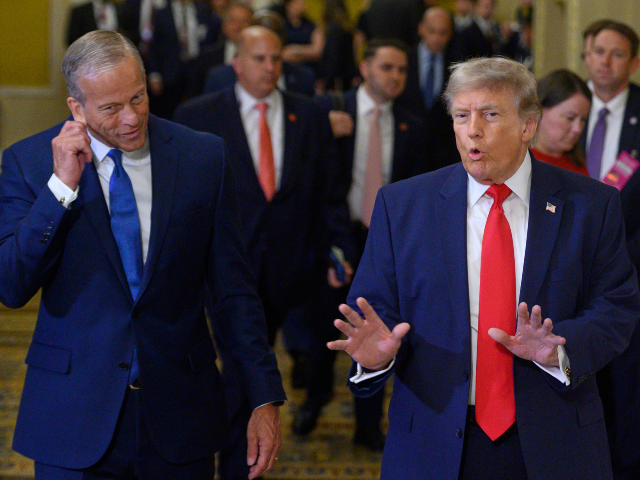

In the final six weeks of unified Republican control of the federal government, there’s one lever Senate Republicans can pull to ensure the executive branch operates at full capacity: allow President Donald Trump to make recess appointments.
The last recess appointments were made nearly 14 years ago as the U.S. Senate has held continuous pro forma sessions to avoid triggering the process.
Just two years ago, Breitbart News published a column by Ken Klukowski and Ken Blackwell outlining the ways in which a president can make recess appointments to overcome obstruction from other party.
The explanation of recess appointments is straightforward. Under the Constitution’s Appointments Clause, senior positions in the federal government are filled by officers who are nominated by the president and confirmed by the Senate. The Recess Appointments Clause in Article II, Section 2, Clause 3 of the Constitution empowers the president to fill high-ranking positions without Senate confirmation under certain circumstances. These recess appointments last throughout whatever annual session Congress is currently in, plus the next session, and includes filling potential vacancies.
A recess of just 10 days would allow President Trump to fill existing vacancies but also those which may arise, during which he could install new senior officials across the government.
The big winner, though, of a recess would be outgoing Senate Majority Leader John Thune.
Many conservatives continue to feel frustrated at the inability of Senate Republicans to pass legislation. Demands to end the filibuster, or even making it harder to filibuster legislation, has fallen on deaf ears. Republicans have done little since passing the Working Families Tax Cuts in July 2025. Another round of government shutdown talks will quickly become the only topic of conversation in Washington as the December 11 funding deadline looms.
Thune declaring a 10-day recess carries little downside. What exactly are Republicans doing with their lame duck session in power? The two chambers are struggling to agree on a reconciliation bill for defense spending and have failed to agree on permitting reform or acting on college sports legislation. Thune would earn plaudits from conservatives nationwide and demonstrate with a consequential action, not just words, that he is serious about delivering for his voters.
Just a year and a half ago, Thune floated the idea as Senate Democrats stalled hundreds of nominees. Ultimately, he agreed to confirmations en bloc to advance batches of nominees at once, which he continues to employ.
The Senate should allow President Trump the same power every president until the 2000s had to staff their executive branch with their top candidates to fulfill their agenda — while they still can.
Follow Matt Mercer on X: @mattmercer.
COMMENTS
Please let us know if you're having issues with commenting.