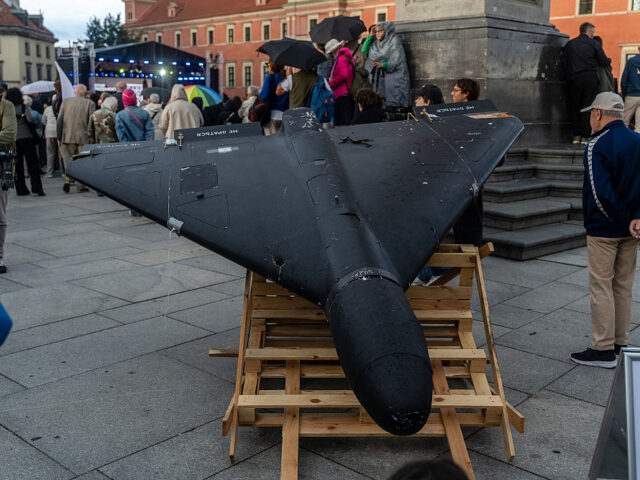

- Ukraine says it has achieved a world-first by shooting down a jet-powered drone with a laser.
- Laser weapons, if perfected, have the potential to square the circle of drone warfare, making drones even cheaper to shoot down than they are to launch.
- Britain said after successfully testing its own laser weapon on 2024 that it would deploy it to Ukraine for further tests.
Ukraine has claimed its first shootdown of a Russian jet powered drone with a domestically produced laser air defence system, calling it a “a world-first achievement”.
A jet-powered Russian drone has been shot out of the sky by a Ukrainian directed energy weapon, a development which if true has enormous potential to mitigate the present prominence of drone warfare as a low-cost, high-impact strategy. Senior military adviser to the Ukrainian President Serhii Beskrestnov made the announcement on Wednesday, crediting the kill of a jet-upgraded Shahed-type suicide drone to the experimental ‘Blysk’ laser.
Beskrestnov said the shootdown took place “recently”, and that the laser was deployed in Ukraine to “protect a critical infrastructure facility”. He further added that the experimental weapon is still under development and is not yet ready to be put into production. He said: “Since laser technologies are highly complex and capital-intensive, it is encouraging to see positive developments in this field”.
This was a “world-first achievement”, he said.
Early in the Ukraine War propeller-driven drones emerged as a potent asymmetric weapon, given they are inexpensive to build and deploy, yet impose enormous costs on the targets, both in terms of the costs of interception with million-dollar missiles, and of the consequences of failing to shoot them down. As Ukraine became more practiced in shooting down Russia’s mass-produced delta-wing Shaheds, Moscow started to swap their piston engines out for small jet units to make them harder to intercept, the latest step of drone development rediscovering the cruise missile from first principles.
Ukraine announced it was commencing defensive laser weapon testing in the Summer, and earlier this month said the indigenously developed Blysk system was being deployed to defend the capital city, Kyiv. Domestic publication New Voice Ukraine reported last week that the early deployment of Blysk had been hampered by the Autumnal weather, given directed energy weapons can be less effective in the rain, which can tend to scatter the laser beam.
At the time, the weapon was described as being relatively modest compared to other laser weapons being developed elsewhere, with a 4kw laser said to be effective to one kilometre (1,000 yards).
By contrast, the Israeli Iron Beam anti-drone laser is said to work at 100kw for a range of 10km (6 miles), and the British Dragonfire is understood to be a 50kw system.
The United Kingdom says it has successfully tested Dragonfire and announced in 2024 it was intending to deploy the system to Ukraine for further testing in a live warzone environment. Nothing has been heard on this intended deployment since.
COMMENTS
Please let us know if you're having issues with commenting.