AP:   Breaking  |  Alerts  |  World  |  US  |  Politics  |  Business  |  Entertainment  |  Life  |  Science  |  Odd  |  Sports  |  Tech
3RD LD: U.N. panel adopts resolution seeking total nuke elimination+
Share on Facebook Bookmark and Share
NEW YORK, Oct. 29 (AP) - (Kyodo)—(EDS: ADDING COMMENTS, INFO)
A U.N. General Assembly committee Thursday adopted a resolution submitted by Japan calling for the total elimination of nuclear weapons.

The nonbinding resolution is expected to pass a plenary session of the General Assembly in December without revision, meaning a Japanese- proposed resolution seeking nuclear elimination will be adopted for 16 straight years since 1994.

Voting conducted by the First Committee found that a record 170 countries, including the United States -- for the first time in nine years -- supported the latest resolution. It calls for all U.N. members to take action "toward the total elimination of nuclear weapons, with a view to achieving a peaceful and safe world without nuclear weapons." The previous record was 169 in 2006.

As well, a record 87 countries co-sponsored the resolution, which Japan submitted to the committee in charge of disarmament in mid- October. The previous record number of co-sponsors for Japanese proposals was 58, marked in 2008.

Two countries -- North Korea and India -- voted against the resolution. There were eight abstentions -- China, Cuba, France, Iran, Myanmar, Pakistan, Bhutan and Israel.

"Adoption of the resolution would help the Japanese government push forward even harder for the total elimination of nuclear weapons," Japanese Ambassador to the Conference on Disarmament Akio Suda said at a news conference after the committee passed the proposal.

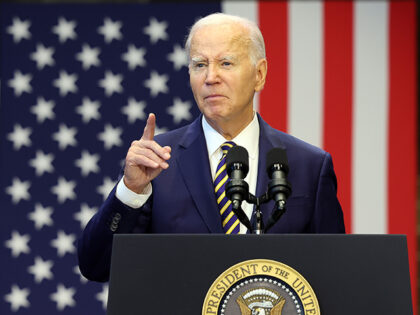
The United States, under the leadership of President Barack Obama, has become a sponsor of the resolution for the first time and voted in support of it for the first time since 2000.

Among other permanent U.N. Security Council members, Britain and Russia backed the latest resolution. France and China abstained from voting.

A Chinese official told reporters there is still "room for further improvement" in the resolution, noting measures envisaged under it are "not practical and viable under the current circumstances." Beijing has abstained in recent years.

France, which supported a similar resolution in 2008, changed its position this year. Eric Danon, permanent representative to the conference on disarmament, said the resolution has "an incomplete listing of the efforts for nuclear disarmament."

The latest U.N. action on the Japanese proposal came amid increasing moves toward nuclear disarmament.

Such moves gathered momentum especially after U.S. President Obama made a bold call for a nuclear-free world in a speech in Prague in April, marking a turnaround in Washington's nuclear policy from the era of President George W. Bush. Obama's pledge is believed to have earned him the 2009 Nobel Peace Prize.

Reflecting such positive sentiment, the General Assembly, in the resolution, welcomes "the recent global momentum of nuclear disarmament toward a world without nuclear weapons, which has been strengthened by concrete proposals and initiatives from political leaders of member states" in particular by the United States and Russia.

As the two largest nuclear weapons holders, Obama and Russian President Dmitry Medvedev, in their summit in Moscow in July, pledged to work together to further reduce their nuclear arms.

A framework the leaders of the two countries worked out for a new pact would reduce their vast arsenals of Cold War nuclear warheads to as few as 1,500 each.

The framework accord marked the first major step toward completing, by the year's end, negotiations on a successor to the 1991 Strategic Arms Reduction Treaty, or START 1, which expires Dec. 5.

Despite global moves toward disarmament, the road to creating a world as envisioned under the resolution is not easy as no U.N. members with suspected nuclear weapons development programs among nonpermanent Security Council countries threw their weight behind it.

The resolution also calls for U.N. members to implement measures proposed under a resolution the Security Council adopted after North Korea's second nuclear test May 25.

The document urges Pyongyang to "return immediately and without pre- conditions" to the six-party denuclearization talks.

The resolution, in a clause not seen in previous resolutions, "stresses the importance of preventing nuclear terrorism and encourages every effort to secure all vulnerable nuclear and radiological material."