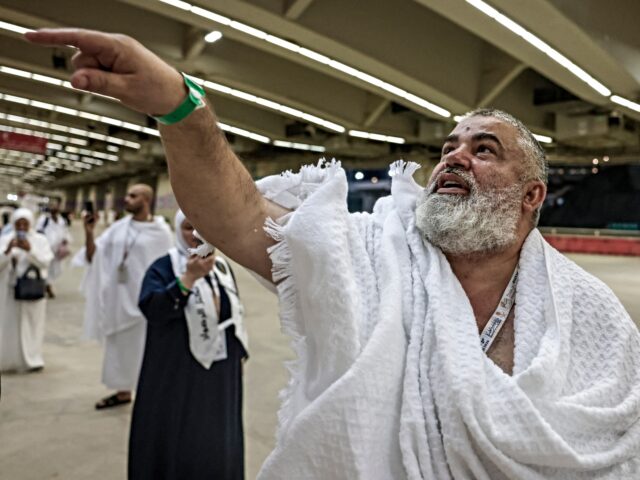

Mina (Saudi Arabia) (AFP) – Muslim faithful took part in the climactic ritual of the annual hajj pilgrimage on Wednesday, symbolically stoning the devil near Mecca.
From dawn, crowds of pilgrims gathered in the valley of Mina, southeast of the holy city of Mecca, to throw pebbles at concrete pillars symbolising the devil.
It reenacts the Prophet Abraham’s stoning of the devil at three places where Satan is said to have tried to dissuade him from obeying God’s command to sacrifice his son Ishmael.
More than 1.7 million people are taking part in the hajj this year. The pilgrimage is a requirement for all Muslims to perform at least once in their life if they have the means.
The most important festival in Islam has, for the third year in a row, been overshadowed by war — this time the US-Israeli conflict with Iran that has drawn in the Gulf nations.
A fragile ceasefire, in place since April 8, has mostly brought a halt to the fighting but diplomatic efforts to bring the war to a definitive end have proved inconclusive so far.
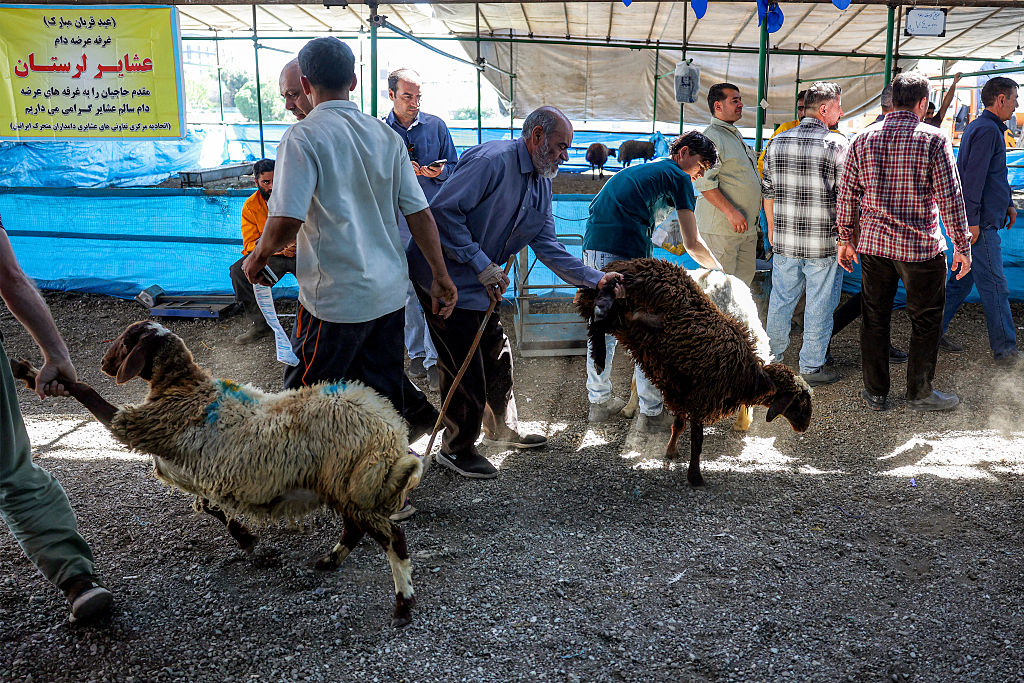
People buy sheep for slaughter at a livestock market in Tehran on May 27, 2026 on the first day of Eid al-Adha, the Feast of Sacrifice, which marks the end of the annual Hajj pilgrimage to Mecca. (AFP via Getty)
The hajj, which involves a series of mostly outdoor rituals over several days, is taking place during intense heat this year.
On Tuesday, pilgrims prayed atop Mount Arafat, where the Prophet Mohammed is believed to have delivered his last sermon, enduring temperatures of 45C.
They then spent the night under the stars at Muzdalifah, halfway between Arafat and Mina, where they collected pebbles for the stoning.
After this final ceremony, the pilgrims return to Mecca for a last circumambulation of the Kaaba, the cuboid building at the heart of the Grand Mosque towards which Muslims turn when they pray.
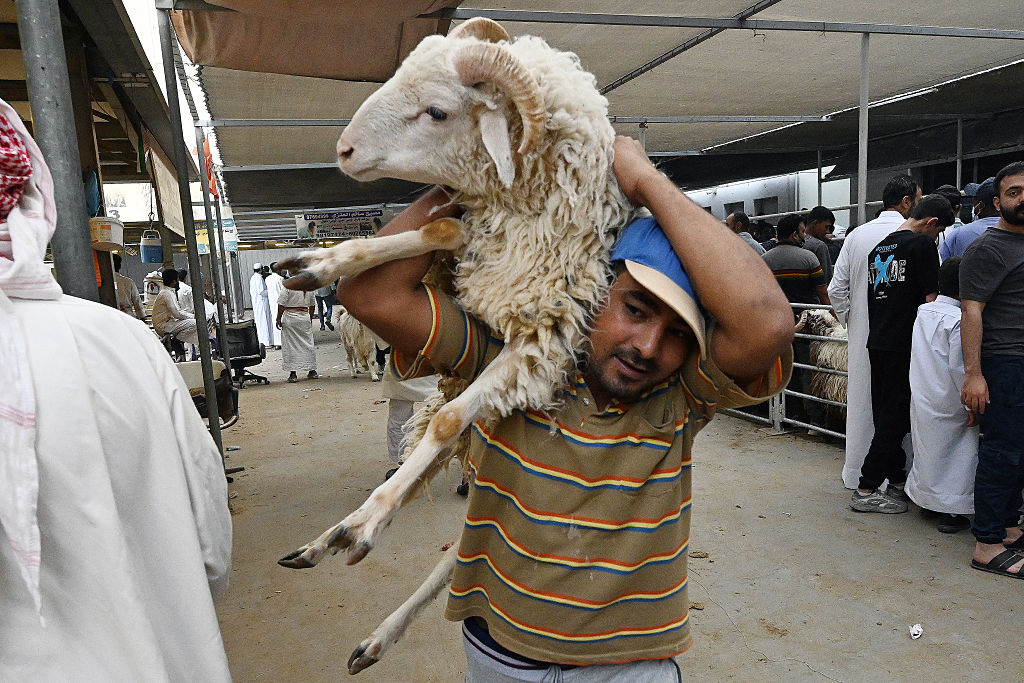
A man carries a sheep at a slaughterhouse in Kuwait City on May 27, 2026, on the first day of Eid al-Adha, the Feast of Sacrifice, which marks the end of the annual Hajj pilgrimage to Mecca and commemorates the Prophet Abraham’s willingness to sacrifice his son in obedience to God. (Yasser Al-Zayyat / AFP via Getty Images)
This last day of the hajj coincides with Eid al-Adha, the festival celebrating the memory of Abraham’s willingness to sacrifice his son before the angel Gabriel intervened and offered him a goat in Ishmael’s place.
The festival is usually marked with the slaughter of a sheep, with some of the meat given to the needy.
COMMENTS
Please let us know if you're having issues with commenting.