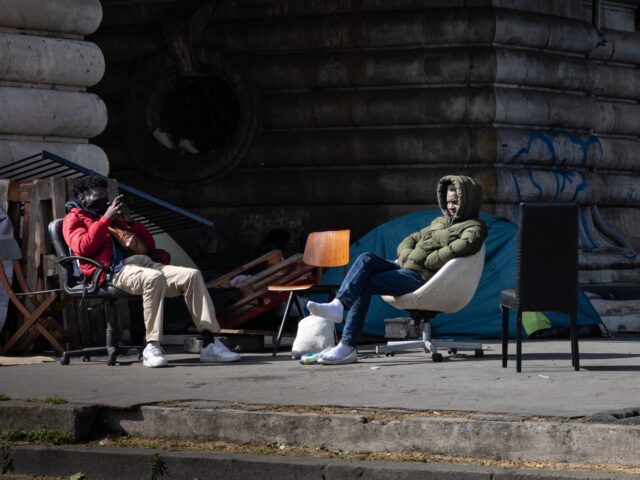

- The vast majority of people in taxpayer-funded emergency accommodations are migrants from outside the European Union.
- It comes as Presidential candidate Marine Le Pen vowed to restore the national priority for social housing to French citizens.
A study conducted by the French government has revealed that over eight in ten people in publicly-funded social housing shelters are foreign nationals.
According to Drees, the official statistical service for France’s health and social ministries, there were 245,200 people being housed in “socially vulnerable accommodation centres” at the beginning of 2025.
This means that some 93.6 per cent of the available 261,900 shelter accommodations provided by the government were full.
The government report found that 84 per cent of those housed in French shelters were migrants.
This cohort was comprised almost entirely of migrants from outside of the European Union, with just three per cent of such accommodations being filled by migrants from fellow EU countries.
Drees further reported that one in three people (32 per cent) in such social housing were minors, while 35 per cent were aged between 18 and 34, meaning that nearly two-thirds were under the age of 35. This comes despite both age groups only making up around a fifth each of the total population.
Conversely, the number of people above the age of 50 were underrepresented in emergency shelter accommodations at just 11 per cent, despite making up 41 per cent of the total population of France.
The government statistician said that the majority of shelter inhabitants were men, representing 54 per cent of occupants, however, the amount of women in shelters has increased by two percentage points over the previous study conducted between 2020 and 2021.
A majority (56 per cent) of adults in shelter are said to be single and childless, compared to 26 per cent of the overall population. Men are significantly overrepresented in such cases, representing 73 per cent of single and childless shelter inhabitants.
The average stay in socially provided shelters stood at 18 months as of January, 31, 2025, Drees reported, while a quarter stayed at least 23 months, and a tenth for at least 43 months.
Nearly six in ten (59 per cent) were housed in other forms of social housing, including other emergency shelters and hotels, prior to being admitted to their current shelter.
The report further found that just 14 per cent being housed in shelters had a job, though four in ten were prohibited by law from working due to their immigration status.
The issue of social housing has become a major topic of debate ahead of the impending French presidential election, with populist National Rally candidate Marine Le Pen vowing to give priority to French citizens for government-sponsored accommodation.
Le Pen has described the current system as “costly, clientelist, unfair, and rigid” and a programme “primarily benefiting incessant and chaotic immigration” rather than “French families in need”.
“We must give priority access to social housing for the French,” she said in a September speech.
“These social housing units were paid for thanks to the financial efforts of our parents, our grandparents; it is intolerable that the French, due to questionable criteria, are excluded from low-rent housing.”
COMMENTS
Please let us know if you're having issues with commenting.