Hiroshima Mayor Tadatoshi Akiba urged people around the world to join the city's effort to abolish nuclear weapons in response to U.S. President Barack Obama's appeal for a world free of nuclear weapons, as Hiroshima marked the 64th anniversary the 1945 U.S. atomic bombing Thursday.
"We support President Obama and have a moral responsibility to act to abolish nuclear weapons," Akiba said in the Peace Declaration at a commemorative ceremony at the city's Peace Memorial Park, reiterating Hiroshima's conviction that "the only role for nuclear weapons is to be abolished."
"To emphasize this point," said Akiba, "we refer to ourselves, the great global majority, as the 'Obamajority,' and we call on the rest of the world to join forces with us to eliminate all nuclear weapons by 2020. The essence of this idea is embodied in the Japanese Constitution, which is ever more highly esteemed around the world."
"We have the power. We have the responsibility. And we are the Obamajority," he said. "Together, we can abolish nuclear weapons. Yes, we can."
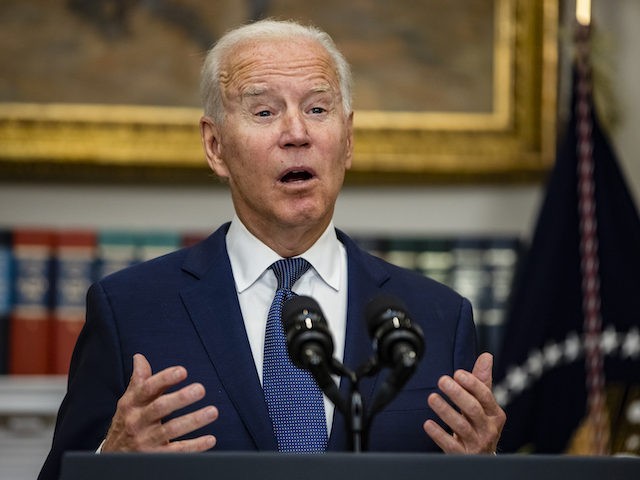
In April, Obama said in Prague that "the United States has a moral responsibility to act" as the only nuclear power to have used nuclear weapons and the country will "take concrete steps towards a world without nuclear weapons."
During the 50-minute memorial ceremony, a moment of silence was observed at 8:15 a.m., the time the atomic bomb detonated over Hiroshima at an altitude of about 600 meters 64 years ago, resulting in the deaths of an estimated 140,000 people by the end of 1945.
"We offer solemn, heartfelt condolence to the souls of the A-bomb victims, and together with the city of Nagasaki and the majority of Earth's people and nations, we pledge to strive with all our strength for a world free from nuclear weapons," Akiba said.
Some 50,000 people attended the ceremony, including representatives from a record 59 countries.
Among nuclear-power nations, Russia participated for the 10th consecutive year, while Israel, which is believed to possess nuclear weapons, was there for the first time. But China, which made its first appearance at the ceremony last year, and the United States did not send representatives.
Prime Minister Taro Aso attended the ceremony, vowing to strongly stand by Japan's three antinuclear principles of not producing, possessing or allowing nuclear weapons on its soil.
"Today, I pledge again that Japan will firmly abide by the three nonnuclear principles and lead the international community to achieve the goal of the abolition of nuclear weapons and everlasting peace" Aso said.
Aso and persons suffering from atomic bombing-related illnesses signed an agreement later in the day, under which the government will provide a blanket resolution to all 306 plaintiffs who have sought recognition as suffering from illnesses caused by the 1945 U.S. atomic bombings of Hiroshima and Nagasaki, putting an end to their six-year-long legal battle.
Akiba, for his part, urged the government to "make its assistance measures fully appropriate to the situations of the aging hibakusha, including those exposed in 'black rain areas' and those living overseas."
"Hibakusha" means A-bomb victims in Japanese.
The declaration also urged the Japanese government to lead the world to achieve the goal of abolishing nuclear weapons by 2020, the fervent desire of the hibakusha, by "tearing down the walls between its ministries and agencies."
"The year 2020 is important because we wish to enter a world without nuclear weapons with as many hibakusha as possible," Akiba said. "Furthermore, if our generation fails to eliminate nuclear weapons, we will have failed to fulfill our minimum responsibility to those that follow."
Mayors for Peace, a group of over 3,000 cities worldwide that Akiba chairs, proposed its "2020 vision" seeking to achieve a nuclear-free world by the year through the Hiroshima-Nagasaki Protocol.
Once the protocol is adopted at the Nuclear Nonproliferation Treaty review conference, the group will call for an immediate halt to all efforts to acquire or deploy nuclear weapons by all countries, including North Korea, which has recently conducted defiant nuclear tests.
Echoing Hiroshima's appeal, U.N. Secretary General Ban Ki Moon said in his message contributed to the ceremony that building a world without the threat of nuclear weapons is an attainable goal.
"I call on all humanity to support this sensible and achievable goal. Let us each do our part in this common journey -- and thereby ensure that there will be no more victims such as those we honor today," the message, which was read for him, noted.
Also attending the ceremony, Miguel d'Escoto Brockmann, president of the U.N. General Assembly as well as a Roman Catholic priest, sought forgiveness from the A-bomb victims, saying the late captain of the B- 29 Enola Gay that dropped the atomic bomb on Hiroshima was also a Catholic.
"In the name of my church, I ask your forgiveness," said d'Escoto.
Michiko Kasama, a 78-year-old hibakusha from Hiroshima who attended the memorial ceremony, said, "Speeches by the mayor and U.N. officials have convinced me that certain change will come."
"I now believe a world free of nuclear weapons urged by President Obama could come true in the future, and I strongly hope the president will visit Hiroshima some day," she said.
According to the Ministry of Health, Labor and Welfare, a total of 235,569 survivors were living throughout Japan as of March 31, down 8,123 from the year before, with their average age at 75.92, while some 4,500 hibakusha live overseas.
Japan surrendered six days after the United States dropped the second atomic bomb on Nagasaki on Aug. 9, 1945, during World War II.