On her first trip to Russia as chief US diplomat, Clinton praised Moscow for its "extremely cooperative" behaviour in the standoff over Iran's programme, which Western nations fear is a veiled attempt to build a nuclear bomb.
Aides had said ahead of her visit that the trip was partly aimed at winning Russian support for eventual sanctions against Tehran if diplomacy did not work. But Clinton denied she had come to Russia on any such mission.
"We didn't ask for anything today. We reviewed the situation and where it stood," she said after talks with Russian Foreign Minister Sergei Lavrov.
Clinton said she agreed with Russian President Dmitry Medvedev's assessment that sanctions against Tehran may be inevitable if it defies world powers over its nuclear drive.
But while describing the Iranian nuclear drive as a matter of "serious concern," Clinton appeared to move to calm Russian fears that Western powers were looking to quickly impose sanctions.
"We are not at that point yet.... It is not a conclusion that we have reached," she said.
Lavrov, whose country has the strongest ties with Tehran of any world power, said that for the moment it would be wrong to talk about a fourth round of United Nations Security Council sanctions on Iran.
"Threats of new sanctions and pressure against Iran under current circumstances are counterproductive," Lavrov said.
"There are situations where sanctions are inevitable, when all other avenues are exhausted. But with Iran we are very far from this," he added.
A US official had earlier said Clinton would ask Lavrov and Medvedev "what specific forms of pressure Russia would be prepared to join us and our other allies in if Iran fails to live up to its obligations."
However Clinton made no mention of what these forms of pressure could entail of if they were discussed.
Russia has long been opposed to tough sanctions against Iran and Medvedev's comments last month had been seen in some quarters as a subtle change in policy aimed at satisfying the West.
Clinton said world powers were "actively pursuing the engagement track" with Iran but that in "in the absence of significant progress... we will be seeking to rally international opinion behind additional sanctions."
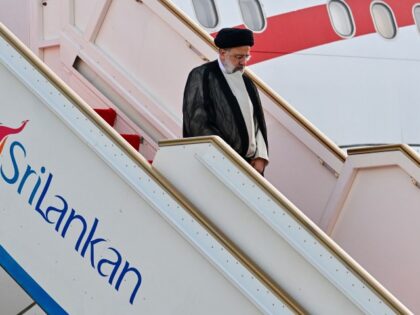
Russia is building Iran's first nuclear power plant in the southern Iranian city of Bushehr, and its political and economic connections with Tehran could prove crucial as the nuclear standoff enters a decisive stage.
Clinton said: "Russia has been extremely cooperative in the work that we have done together."
Russia expressed willingness to help enrich low-enriched Iranian uranium for a research reactor in Tehran to a higher degree, after Iran for the first time agreed to discuss its enrichment operations with the West.
The United States, Russia, China, Britain, France and Germany have been leading international efforts to persuade Iran to halt its disputed uranium enrichment programme.
The West fears the programme masks a drive for the atomic bomb -- a charge denied by Tehran, which says it is for peaceful nuclear energy.

However, Iran has tried to make a show of greater cooperation since taking part in negotiations in Geneva with the world powers this month.
New US President Barack Obama has pledged to "reset" relations with Russia, whose ties with the United States have been strained by US missile defence plans, NATO expansion and last year's Russia-Georgia war.
Lavrov said the two sides had also made "substantial movement forward" on negotiations to replace the 1991 Strategic Arms Reduction Treaty (START).
START, which strictly limits US and Russian arsenals and is seen as a cornerstone of Cold War-era strategic arms control, expires on December 5.
Clinton said US and Russian negotiators were on schedule to complete an agreement by then.
Clinton, who last week rapped Russia's failure to bring to justice the killers of journalists and rights activists, also met members of Russian civil society to discuss human rights.