Nearly a full day after a series of terror attacks in India's financial capital Mumbai began Wednesday night, leaving at least 125 people dead and as many as 337 wounded, gunfire is still ringing from targeted luxury hotels Thursday.
The Hindustan Times reported multiple gunshots were heard from within the Taj Mahal hotel shortly after 5 p.m. as security forces continued to clash with terrorists holed up in the luxury hotel.
And India's NDTV said three more explosions rocked the hotel around the same time.
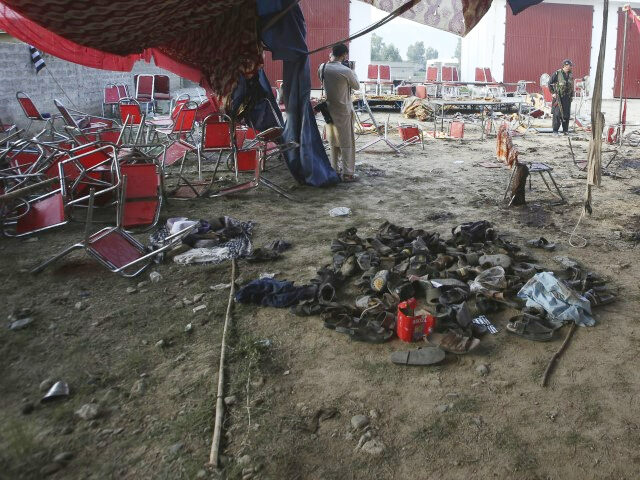
The newspaper also reported that e-mails have been received warning of more attacks and that Indian airports are on high alert.
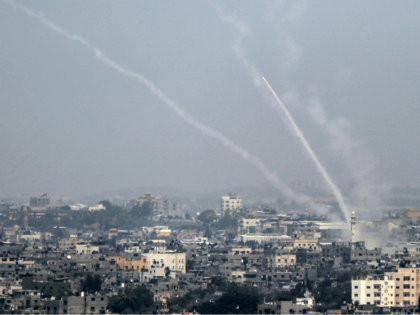
A little-known group of Islamic militants has reportedly claimed responsibility for the attacks by teams of men armed with automatic weapons and grenades, who apparently arrived by boat.
Indian Prime Minister Manmohan Singh, in an address to country, condemned the attacks and charged they came from terrorists "based outside the country."
He did not, however, elaborate on that charge.

Singh also said his government would be setting up a federal government agency to coordinate against threats to public safety in India.
India's NDTV television reported 125 fatalities, including six foreigners.
NDTV said nine attackers were nabbed and five were killed, while 14 policemen, including Maharashtra state Anti-Terrorism Squad chief Hemant Karkare, also died.
Nearly a day after the attacks started at around 9 p.m. Wednesday, two five-star hotels popular with foreigners -- the landmark Taj Mahal, which was on fire with smoke billowing from its roof, and the Trident, formerly known as the Oberoi -- were still under siege with explosions and gunshots being heard.
NDTV reported three chefs and 15 to 17 other staff at the Taj Mahal hotel lost their lives and a report from Canada said a family there learned their 22-year-old niece, who had begun working at the Trident just two weeks ago, is among those gunned down.
According to several media sources, the gunmen rounded up American and British passport-holders at the hotels and held them hostage.
Later Thursday, reports from the city said the hostage crisis at the Taj had ended, but some people were trapped in their rooms because of fires.
Those reports, however, seemed premature and Reuters quoted officials as saying 20 to 30 people may still be being held hostage at the Trident, while many others are trapped in both the hotels.
Later reports said as many as nine hostages have been rescued from the Trident, but several more remain held by the attackers.
NDTV said there were attacks on at least 10 places in the city overnight, including near the U.S. Consulate, Cafe Leopold, which is popular with tourists in the city, at the Cama and GT hospitals, and at two cinemas.
Indian army sharpshooters and some 200 commandos of the National Security Guard, a counterterrorism special response unit, were assisting local police in flushing out gunmen holed up in hotels, the Press Trust of India said.
The Times of India reported about 100 commandos preparing a final assault on Nariman House, a housing complex that includes a Jewish temple where more attackers, possibly with hostages, remained barricaded.
A little-known organization calling itself the Deccan Mujahideen has reportedly claimed responsibility for the attacks in e-mails sent to some media organizations.
In Tokyo, the Foreign Ministry said one Japanese man was killed in a shootout in Mumbai, while another Japanese citizen was injured.
At least one Australian and an Italian are among the dead.
Government leaders from around the world have condemned the attacks.
Pakistan President Asif Zardari called Sonia Gandhi, chair of India's Congress Party, to offer his condolences over the attacks on Mumbai, a statement by the presidential spokesman said.
It said Zardari told Gandhi that Pakistan "strongly condemns the terrorist acts and the killing of innocent people."
Foreign Minister Shah Mahmood Qureshi, already in India for talks with his counterpart Pranab Mukerjee, was reported by GEO TV to have proposed the national security advisors of the two countries get in touch by "hotline" to discuss counterterrorism measures.
A wave of terror has hit Indian cities, including Mumbai, in recent years.
Most have been blamed on Islamist militants.