Swept to power last May on a promise to kickstart the economy, Sarkozy has seen his popularity collapse in the polls faster than any president since World War II, and is facing mounting hostility to his economic reform drive.
"For there to be disappointment... for there to be problems, for there to be difficulties, not only do I know that, but I was prepared for it," Sarkozy said in a prime-time interview broadcast.
"I probably made mistakes myself," he said, when asked to comment on polls that show three quarters of voters are unhappy with his record in office.
The French president admitted his right-wing government had "probably not explained well enough" its reform goals, a frequent complaint from members of his own ruling UMP party.
But he also pointed at soaring oil and food prices and the fallout from the sub-prime loan crisis in the United States to explain the souring economic mood in France -- seen by pollsters as a key reason for his plummeting ratings.
"France has been asleep for the past 25 years... We have a difficult international context, all the more reason to accelerate reforms," Sarkozy said.
"France's problem is that it does not work enough," he said, defending his efforts to relax France's 35-hour working week, including through tax cuts on overtime pay.
Sarkozy said the government would roll out a scheme to encourage the long-term unemployed back to work -- including taking away benefits from people who turn down two job offers -- and would unveil a bill to boost employee share ownership.
The 90-minute live question-and-answer session with five journalists was billed as a key opportunity for the 53-year-old president to turn the tide of public opinion.
Sarkozy paid a high political price for his divorce and celebrity romance with former supermodel Carla Bruni, France's new first lady, which jarred with an increasingly gloomy economic mood.
Only 28 percent of the French believe Sarkozy's presidency is going in the right direction, according to two polls by CSA and IFOP, while a separate survey showed 79 percent feel their lives have not improved in the past year.
Socialist Segolene Royal, who lost to Sarkozy in the presidential election, described his time in office as a "lost year for France".
Prime Minister Francois Fillon, who has remained more popular than the president, said he expected Sarkozy to set a new "road map" for reform.
In poll after poll, the French have listed spending power as their number one concern, replacing unemployment which had been the nation's economic obsession for decades.
But the slowing economy has significantly reduced Sarkozy's room for manoeuvre.
As French consumers feel the sting from inflation rates at their highest level since the 1990s, the Socialists accuse the government of bringing in austerity measures, with plans to trim seven billion euros (11 billion dollars) off the public deficit.
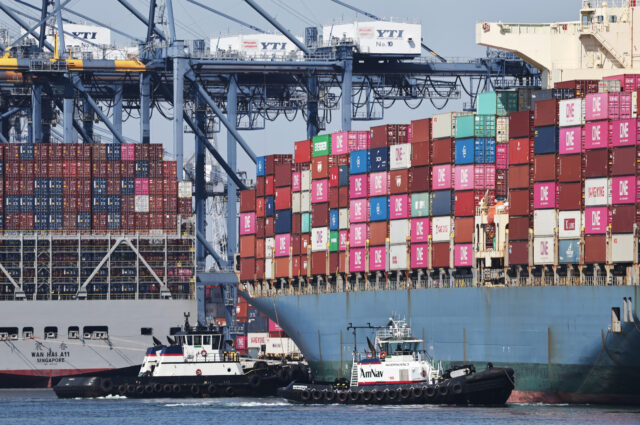
High school students have staged three weeks of protests against plans to cut 11,200 education jobs, part of a drive to streamline the public service, while dockers have shut down France's ports in protest at privatisation plans.
Adding to his woes, the president is confronted with bickering among ministers, and grumbling from right-wing deputies who blamed him for the UMP's poor showing in local elections last month.
Sarkozy has changed his style, from the whirlwind "hyperactive" presidency of the early days to project a more staid, statesmanlike image.
But his troubles have continued to pile up, with his popularity ratings stubbornly below the 40-percent mark.