AFP:   Breaking  |  World  |  US  |  Politics  |  Business  |  Entertainment  |  Life  |  Science   |  Odd  |  Sports
Bernanke: haunted by fear of another Great Depression
Share on Facebook Bookmark and Share
Federal Reserve Bank chairman Ben Bernanke, who was reappointed to a second four-year term Tuesday, is a renowned expert on the Great Depression, driven to avoid a repeat of such devastation.

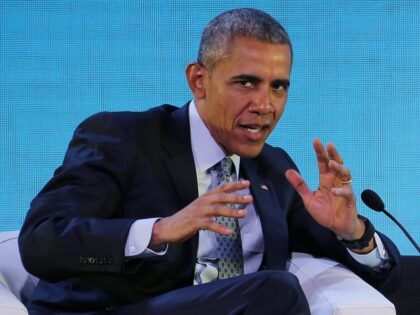
Bernanke has earned plaudits for helping steer the US economy through one of its most perilous periods and toward recovery, with President Barack Obama repeatedly thanking him for his contribution.

He was aided in his bid for a second term at the helm of the Fed by the strong working relationship he has forged with Democrat Obama's economic team -- despite being a holdover from George W. Bush's Republican administration.

Bernanke is a noted scholar on the 1930s Great Depression, the greatest economic calamity in US history, when banks and companies collapsed by the thousands and jobs disappeared by the millions.

His supporters cite that expertise in commending the Fed chief's actions guiding the United States through the global economic freefall.

Bernanke, 55, has won praise from many analysts who believe his decision-making and management skills have ensured that the US economy will weather the tough economic storm.

While his reappointment Tuesday was widely praised, Bernanke has not always found himself in favor.

He has at times faced a hostile Congress, with lawmakers mistrustful of his approach to the economic crisis, and midway through his term, the prospects of him being reselected for the post were much less certain.

A former economics professor at Princeton, Bernanke has written that surviving economic crisis depends on policy decisions.

"The economic repercussions of a stock market crash depend less on the severity of the crash itself than on the response of economic policymakers, particularly central bankers," he wrote in a 2000 article in Foreign Policy magazine.
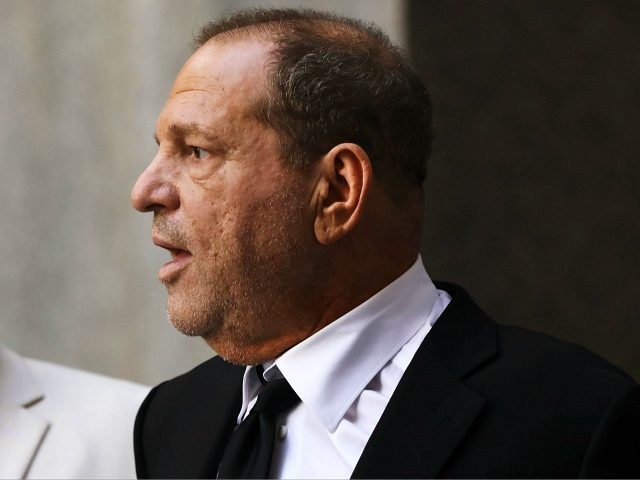
Bernanke was a Fed governor in 2002-2005 under the then-chairman Alan Greenspan and chaired the Bush administration's Council of Economic Advisers immediately prior to taking his current post in February 2006.
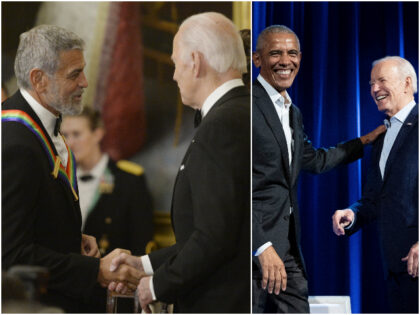
Bernanke's tenure at the head the US central bank has marked a break with his predecessor, particularly in the area of communication. Bernanke has stressed the importance of transparency in the Fed's communications, stepping away from Greenspan's tendency to speak obscurely and give little away.

On the policy front, Bernanke differs from Greenspan in advocating that the Fed adopt an explicit inflation target, a common practice among other leading central banks.

And unlike his predecessor, Bernanke has made himself available to the media, including a much-hyped appearance on the popular "60 Minutes" news show and another at the National Press Club -- the first Fed chairman to appear before that forum.

The Fed chief has been criticized for failing to better predict the seriousness of the economic crisis the United States would come to face -- in 2007, when the first signs of the subprime mortgage crisis began emerging, Bernanke assured Congress that the fallout would be relatively limited.

"It's possible that it might lead to fewer construction jobs, that it might also have effects on the economy. But to this point, we've not seen significant spillovers from the housing sector into other parts of the economy," he said in July 2007.

Others accuse Bernanke of failing to act quickly to cut interest rate once the full scale of the crisis began to emerge. The Fed instead adopted a go-slow posture on cutting rates, before making an emergency cut in January 2008.

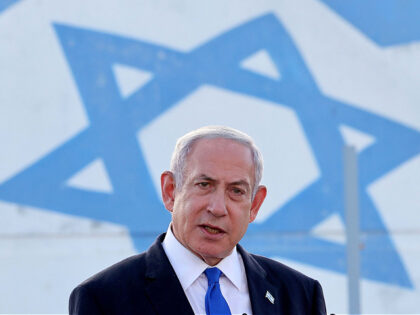
Bernanke was born on December 13, 1953, in Augusta, Georgia, to a pharmacist father and a schoolteacher mother. He grew up in a Jewish household, a minority in the heavily Christian community.

He spent his childhood in the small farming town of Dillon, South Carolina, -- population 7,500 -- and was a star scholar, achieving a near-perfect score in the Scholastic Aptitude Test (SAT), a university entrance exam, before graduating in economics from Harvard in 1975 with top honors.

The married father of two received a PhD in economics four years later from the Massachusetts Institute of Technology, and worked at Princeton for 17 years before joining the Federal Reserve Board in 2002.


Copyright AFP 2008, AFP stories and photos shall not be published, broadcast, rewritten for broadcast or publication or redistributed directly or indirectly in any medium